
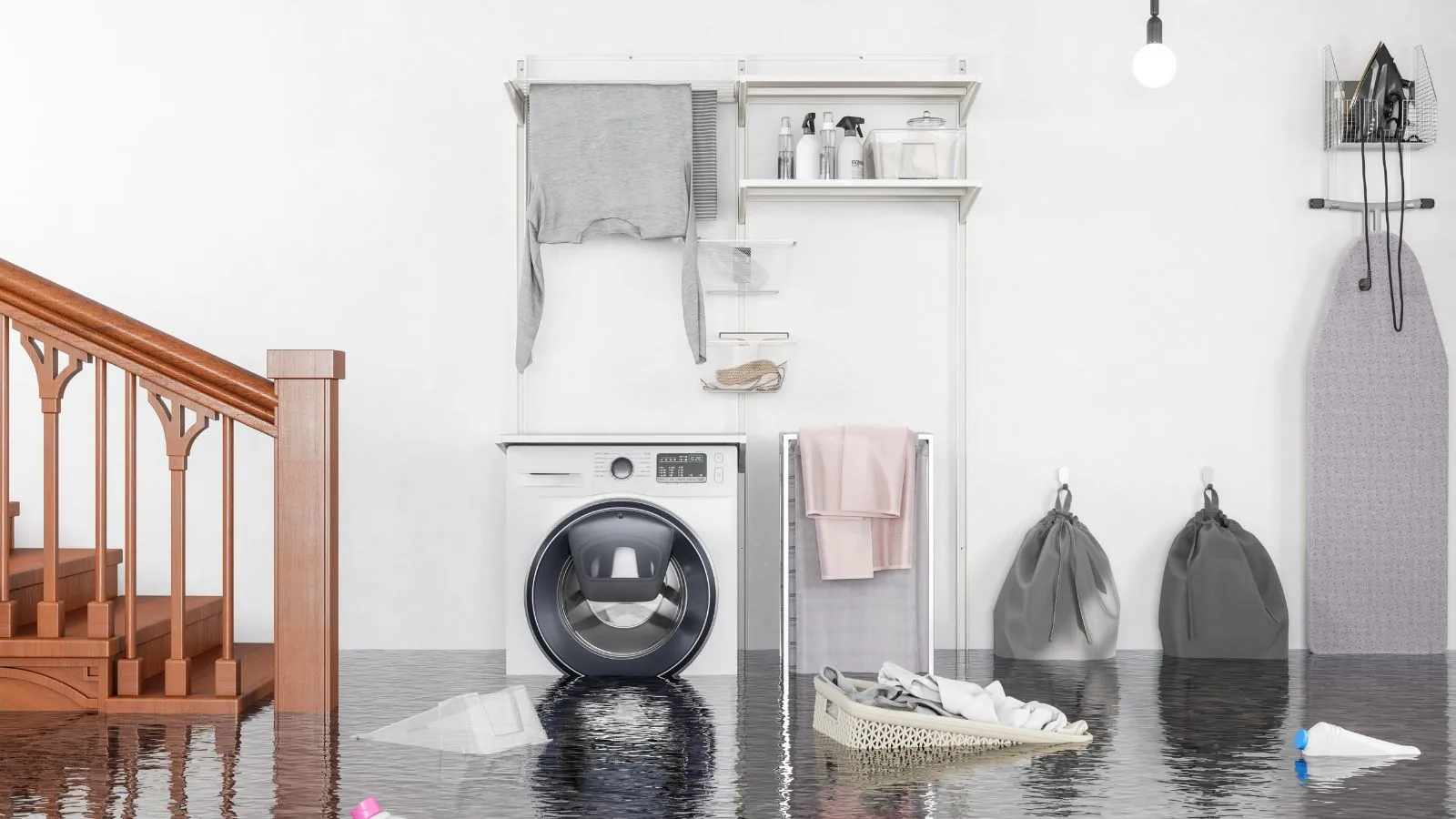
Water-damaged electronics in a Saint James, NY home are devices, cords and appliances that got wet and may now carry electrical risk or internal corrosion. The first question is never whether the device can be saved. It is if you can touch the plug, the outlet or the floor without standing in water or reaching across a wet surface.
This guide ranks the decisions in order, then offers a device-by-device triage. If the room itself is flooded, the flood damage cleanup page covers the building side.
Electrical safety comes before the electronics
Water and household current are a dangerous pair, and a wet floor makes the whole room part of the circuit. If water has reached outlets, power strips, appliances or cords, treat the room as live until proven otherwise. Do not wade in to rescue a television or a gaming console.
Look for clues from the doorway, where you can see the room without stepping into it. A tripped breaker, flickering lights, a buzzing sound, a burning smell or sparks at an outlet all mean you should stay out and keep others out as well.
How to cut power safely
If the breaker panel is in a dry area and you can reach it without crossing water, switch off the breaker for the affected room, using a dry hand and dry footwear. Then unplug devices with dry hands, pulling the plug itself and never the cord.
If the panel is in a wet basement or you cannot reach it dry, do not try. Your electric utility can shut power off at the meter, and the steps are in the local note below. Never switch on a circuit to test whether something still works.
Triage table by device type
Once the room is safe, work through devices from most to least risky. The table gives a general approach, and the maker's instructions and a qualified technician should override it.
| Device | What to do | Main concern |
|---|---|---|
| Phone or tablet | Power it off, do not charge it, remove the case and card, and leave it to dry in open air | Internal corrosion and battery damage |
| Laptop | Shut down if it is still on, unplug, remove the battery if it comes out, and keep it open and upside down | Liquid on the motherboard |
| Television or monitor | Leave it unplugged and do not turn it on until it has been checked | Power supply and screen circuitry |
| Game console or desktop computer | Unplug, disconnect cables and keep drives intact for a data specialist if needed | Stored data and power supply |
| Router, modem and small electronics | Unplug and keep them off until dried and inspected | Corrosion on boards and connectors |
| Power strips and extension cords | Discard any that got wet | Hidden damage in insulation and connectors |
| Refrigerator, washer or dryer | Leave unplugged until a technician has looked at the wiring and controls | Motor and control board damage |
| Furnace, water heater and other floodwater-exposed equipment | Do not restart, and have a licensed professional inspect | Controls, wiring and gas or electrical hazards |
What not to do with a wet device
Do not press the power button to see if it still works, and do not plug it in to charge. Do not use a hair dryer, oven or microwave, because heat can warp parts and push moisture deeper. Skip shaking or tapping a device, which moves water across the board.
If a battery swells, hisses or gets hot, set it outside on a hard, nonflammable surface and keep it away from anything flammable. Do not charge it, and do not puncture it. Tell your household about the hazard so nobody picks it up later.
What restoration crews do and do not do with electronics
A drying crew removes water, dries structure and contents, and documents the damage. Restoration crews do not repair electronics, so a company that promises to bring your television or laptop back is not describing the work they do. Their job is the building, the flooring, the drywall and the air.
Some specialists recover data from water-damaged drives and phones, and you can ask your insurer or an electronics repair shop where to find one. Protect the device by keeping it dry and unplugged until then. The crews you call for the building can also dry the walls and floors around a damaged room, and the basement water damage cleanup page describes that work for below-grade rooms.
Record the loss before anything is discarded
Photograph each device, its label, the model and serial number, and its position in the room. Note the age and purchase price when you can. Your insurer may ask for these details, so ask what it requires before throwing anything away.
Electrical permits and inspections depend on the address. For homes in Saint James, Nesconset and Smithtown, ask the Town of Smithtown Building Department if your electrical repair needs a permit. If the water is still spreading, you can call our 24/7 dispatch line to reach our 24/7 dispatch line.
Saint James note: what PSEG Long Island says about flooded rooms
PSEG Long Island, the electric provider for Long Island, says flood water can affect your electric meter, electrical panel, wiring and other equipment. Its flood safety guidance tells people not to enter a flooded room where water reached outlets, appliances or cords. In a Saint James basement that means the stairs stop being a shortcut to the panel.
If you cannot reach the breaker dry, PSEG Long Island says to call 1-800-490-0075 so power can be shut off at the meter. That call is the safe route when the panel sits in a wet utility corner and the water is still rising.
The same guidance says a licensed electrician must inspect the system before power is reconnected. Plan for that inspection before you try to restart any appliance, because a device that seems fine can still be fed by wiring that has not been checked.
Frequently asked questions
Should I unplug a wet device or leave it alone?
Unplug it only if you can reach the outlet and breaker without standing in water or crossing a wet surface. If water reached outlets, appliances or cords, stay out of the room and have the power shut off at the panel or the meter.
Can I dry out a wet phone or laptop and use it again?
Power it off, keep it unplugged and let it dry in open air, but do not turn it on to check. Corrosion can keep working inside after the surface looks dry, so have a qualified technician look at anything you rely on.
Do water damage restoration companies repair electronics?
No. Crews dry the structure and contents, and they do not repair electronics. Data recovery specialists exist for drives and phones, so keep the device dry and unplugged if the files matter.
Should I throw away wet power strips and extension cords?
Yes. Insulation and connectors can hold moisture and damage you cannot see, so replace any strip or cord that got wet.
Who can say the wiring is safe to turn back on?
A licensed electrician. PSEG Long Island says a licensed electrician must inspect the system before reconnection, so do not restore power on your own.
Does the Town of Smithtown require a permit for electrical repairs after water damage?
The Town of Smithtown Building Department handles permits for most buildings in Saint James, and its online permit page lists an Electric Only application. The page says nothing specific about water damage repair, so ask the department if your electrical work needs a permit.