
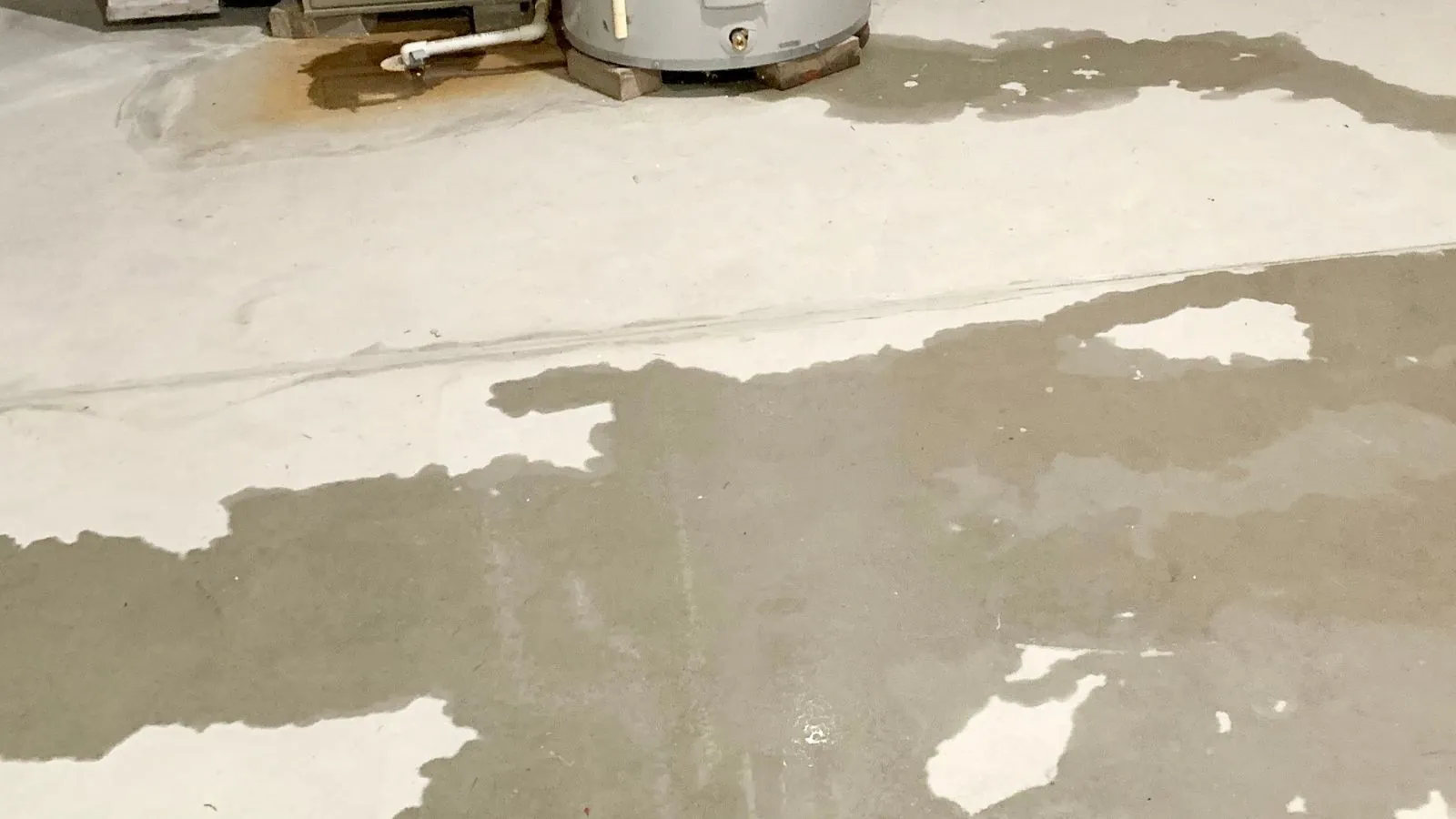
If you suspect a leak under your floor, close the main water valve now and call our 24/7 dispatch line while you check the water meter. Keep rugs and furniture off any damp or warm area, and do not drill or cut into the floor yourself.
Slab leak water damage in Saint James, NY is the wetting of flooring, baseboards, walls and the concrete itself by a pressurized supply line that has failed under or inside a slab foundation. It is found late because the water has no obvious place to go, so the floor needs structural drying once the leak is fixed.
The floor is warm or the water bill jumped and nothing is visibly leaking
A warm spot on the floor, a meter that keeps spinning with every fixture off, or the sound of water running when nothing is on can all point to a supply line leaking under the floor. The trade term is a slab leak, and it means pressurized water is escaping from a pipe buried in or under the concrete.
That does not mean it is always a slab leak. A running toilet, a dripping irrigation valve or a leaking hot water line in a wall can look the same, and a plumber has to confirm which one it is.
Check your foundation type first
We cannot cite a source that documents how often slab leaks happen in Saint James, so this page sticks to how they work and when they occur. Many Long Island homes have basements or crawl spaces rather than slabs, and a house with a basement does not have this problem in the same way. Look at how your house sits on the ground before you assume.
If you have a basement, a leak in the supply line shows up on the basement ceiling, the floor or the wall, and you will see it sooner. Our pages on basement water damage cleanup and crawl space water damage cover those foundations. If you have a slab, the rest of this page applies.
Why supply lines fail under a slab
Slab leaks start with copper or plastic lines that run through or beneath concrete. Over decades, soil chemistry and moving water can wear a pinhole in copper from the outside. A pipe can also rub against gravel or rock when it expands with hot water, wearing a hole in its wall.
Settling soil and a shifting slab put stress on joints and fittings. High water pressure makes every weak point leak sooner. The water then moves through the gravel bed and the slab cracks, softening the soil and raising moisture in the floor above.
Signs and other causes compared
No single sign proves a slab leak. The table shows each sign and the other causes that look the same, so you can rule out the easy ones before paying for leak detection.
| What you notice | Could be a slab leak when | Other causes to rule out |
|---|---|---|
| Warm spot on the floor | It sits over a hot water line and appears with no heating on | Radiant heat, a duct under the slab or sun through a window |
| Water bill jumps | The meter moves with every fixture off | A running toilet, an irrigation leak or a dripping faucet |
| Sound of running water | It continues when all taps are off | Toilet flapper, a water softener cycle or an appliance filling |
| Damp carpet or floor edge | It sits along a line where a pipe runs below | Condensation, a wall leak or poor yard drainage |
| Musty smell or mold-like spots | It grows near a damp patch | A roof leak, a dehumidifier problem or old moisture |
| Low water pressure | It drops without a clear fixture cause | A clogged aerator, a failing valve or a main line issue |
Ask your water district about a meter check
Your water district can tell you what your meter reading and recent usage look like, and many can explain how to read the meter yourself. Check your bill to see which district supplies you, then ask whether it can help check for a leak. Do this before you pay a leak detection company.
The practical use is simple. Turn off every tap, appliance and irrigation system, then watch the leak indicator on the meter. If it moves, water is escaping somewhere past the meter. If it sits still, the problem is probably not a supply leak under your floor.
What happens after the leak is found
A plumber or leak detection specialist finds the leak with acoustic listening equipment, pressure testing or thermal imaging. The repair might be a spot repair, a reroute through the walls or attic, or a repipe. That is a licensed plumber's job, and the drying should start as soon as the supply is shut off.
The restoration side starts with a moisture meter and a thermal imaging camera across the floor, baseboards and the lower walls. Water goes out with an extraction unit if there is standing water. Tile, laminate and hardwood are checked, and wet carpet pad is usually removed. Crews work to ANSI/IICRC S500, the published water damage standard, and you can ask any company whether its crews follow it.
Concrete holds moisture for a long time, so drying uses air movers and LGR dehumidifiers for several days. Our page on hardwood floor water damage repair and the one on carpet water damage restoration explain what can be saved on top of a wet slab.
Options and honest trade-offs
Spot repair is the least disruptive plumbing option, because the plumber breaks a small section of slab and fixes the failed spot. It is a good fit when one pinhole has been found and the rest of the pipe is sound. If the pipe is old and has several weak spots, a spot repair may be followed by more leaks.
Rerouting the line through walls or the attic avoids the slab altogether. It costs more up front but removes the buried pipe as a future risk. A repipe replaces the whole run and costs the most. For the water damage itself, expect a slow dry-down, since concrete releases moisture slowly and flooring that goes back too early can fail.
A suspected slab leak is active right now, urgent steps
Use these steps to keep the water from spreading while you wait. They are in order of safety.
- Close the main water valve, which is usually where the line enters the house near the meter or the water heater.
- Open a faucet at the lowest point in the house to bleed off pressure.
- Turn off the water heater at its breaker or gas control so it does not run dry or overheat.
- Stay off any area where water is spreading near outlets, and switch off those circuits at the panel only if you can reach it standing on dry ground.
- Roll back wet rugs and lift boxes and furniture legs off damp flooring.
- Photograph damp areas and the meter reading, since NY Department of Financial Services advises documenting your losses before cleaning anything up, then call the 24/7 line.
What drives the cost of slab leak water damage
The damage side depends on how long water has been escaping. These are the factors that decide the work.
- Water category, since clean supply water is less of a concern than water that has stood and picked up contaminants
- Affected area, from one room to a whole slab-on-grade floor
- Materials, such as tile, laminate, engineered hardwood or carpet and pad
- Drying days and equipment, because concrete dries slowly and needs dehumidifiers
- Rebuild scope, from replacing baseboards to new flooring and drywall
Insurance and getting a real number
Sudden and accidental water damage is often covered, while gradual leaks and neglect often are not, which can matter on a slow, hidden leak. Check your policy or ask your insurer how it treats a hidden plumbing leak.
To get a real number, call the 24/7 line and tell the dispatcher what you noticed, what the meter did and what flooring you have. For homes beyond Saint James, see our page for Smithtown.
Frequently asked questions
Do you handle slab leak emergencies at night or on weekends in Saint James?
Yes. The dispatch line runs 24/7, including nights and weekends, and we offer same-day response when available. We do not promise an arrival time. Close the main valve while you wait, and keep furniture and electronics off damp flooring.
Why is my floor warm and my water bill high with no visible leak?
A hot water line leaking under the slab can warm the concrete above it, and a leak anywhere on the pressurized side raises the bill. Check the meter with everything off. If it moves, call a plumber to locate the leak, then call us to dry the floor.
How common are slab leaks in Saint James?
We do not have a source we can cite for how often they happen here, so we will not guess. Many Long Island homes have basements or crawl spaces instead of slabs, so check your foundation type first.
Do you find and fix the leak?
No. A licensed plumber or leak detection specialist finds and repairs the line. Dispatched crews dry and repair the flooring, walls and baseboards the water reached.
Can I check for a leak using my water meter?
Yes. Turn off every tap and appliance, then watch the leak indicator or the dial on the meter. Movement means water is escaping somewhere past it. Your water district can explain how to read the meter.
Will insurance cover slab leak damage?
It depends on your policy and whether the leak was sudden or gradual. Many policies treat access to the pipe differently from the resulting water damage. Ask your insurer. We cannot promise coverage.