
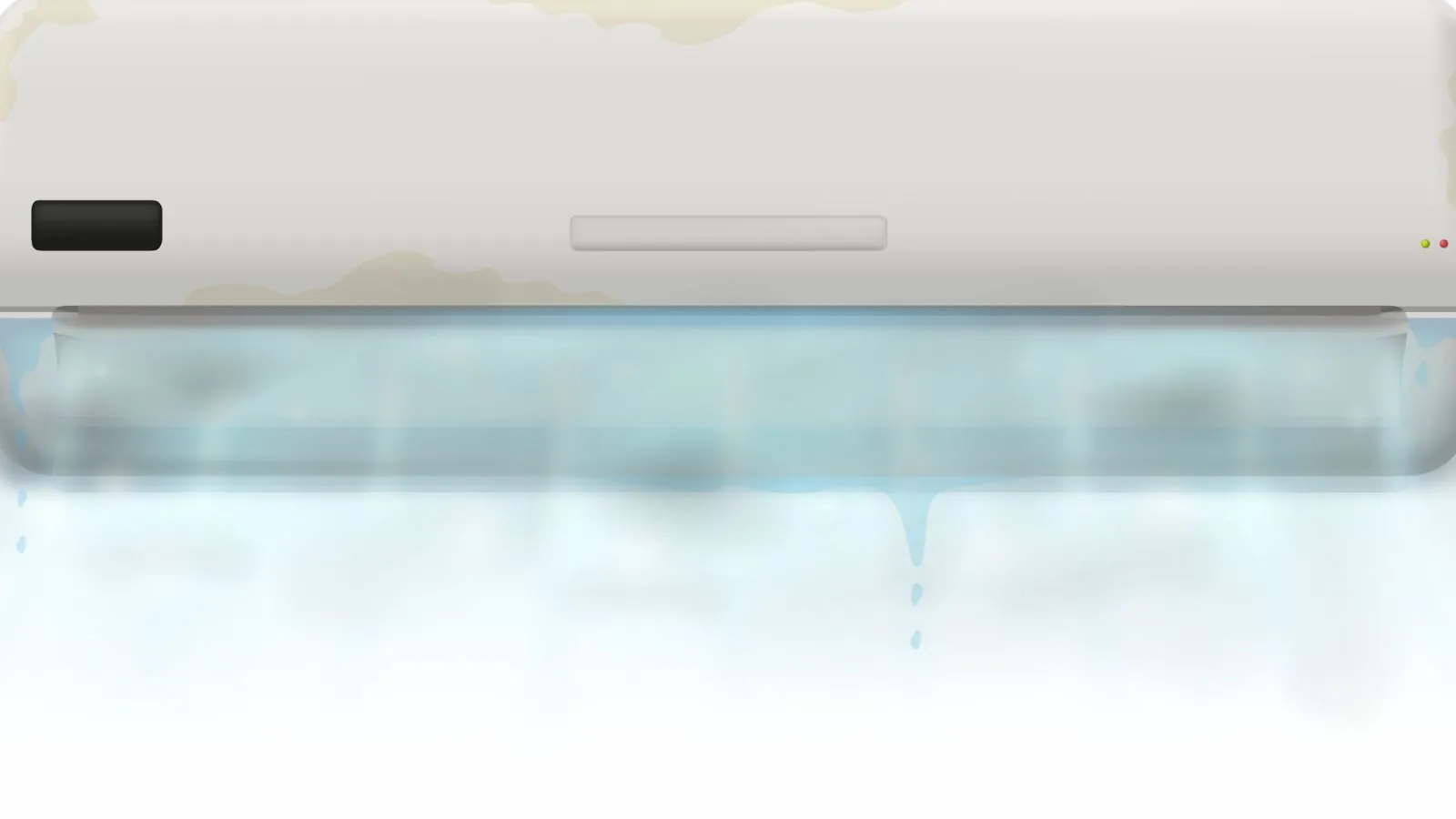
AC leak water damage in Saint James, NY is the wet drywall, insulation, flooring and framing left behind when an air conditioner or heat pump drains where it should not. The water is condensation, not rain, and it usually comes from a clogged drain line, an overflowing pan or a frozen coil.
An HVAC technician fixes the equipment. Restoration crews dry the building and repair what the water damaged. Both jobs matter, because a repaired unit that sits above wet insulation will keep the damp alive.
How an air conditioner makes water, and where it escapes
Cooling air pulls moisture out of the house, and that moisture collects on the cold evaporator coil as liquid. The water drips into a drain pan and leaves through a condensate drain line, which is usually a 3/4-inch PVC pipe that runs to a floor drain, a pump or the outdoors. On a hot, humid day a system can produce gallons of water.
When anything blocks that path, the water goes somewhere else. It overflows the pan, runs down the air handler and soaks the closet floor, or drips from an attic unit onto the ceiling below. A leak that starts quietly can run for weeks before a stain appears.
Signs an AC leak is already damaging the house
Most AC leaks show up in four places. You will see them near the air handler, under an attic unit, on a wall below a mini-split or at a ceiling vent. Catch them early and the repair is small.
- A stain or sag on the ceiling under an attic air handler
- Water in the drain pan, rust on the pan or a wet closet or utility room floor
- Ice on the evaporator coil or refrigerant lines, followed by dripping when it thaws
- A musty smell when the system runs, often from damp insulation or a wet pan
- Stains on the wall below a mini-split indoor unit
The five usual causes
A clogged condensate drain line is the most common cause. Algae and sludge build up inside the pipe until water backs up into the pan. When the pan fills, it overflows, and in an attic or a closet that water has nowhere to go but through the ceiling or floor.
A frozen evaporator coil causes a sudden leak even though the pipes are fine. Low airflow from a dirty filter or a failing blower lets the coil drop below freezing. When the ice thaws, the pan cannot hold the volume, and water runs out all at once. Turn the system to fan only, and the ice will melt faster.
Mini-split indoor units leak when the small drain hose sags, kinks or fills with debris, and the water runs down the wall. Attic air handlers add risk because the pan sits above finished ceilings, and a rusted pan or a failed float switch removes the last safety net.
Drain pan overflow or a roof leak, how to tell
These two causes look alike on a ceiling, but they behave differently. A drain pan overflow tracks the air conditioner. It shows up when the system runs, often on humid days, and it stops soon after the unit is turned off. The stain sits under or near the air handler or its drain line.
A roof leak tracks rain. It appears during or after a storm, whatever the thermostat says, and the stain is often darker with ragged edges. If you cannot tell, turn the AC off for a day. If a stain keeps growing on a dry day, the unit is probably not the cause. Roof water belongs on the ceiling water damage repair page, which also covers who fixes the roof.
| Symptom | Likely cause | Who fixes it |
|---|---|---|
| Water pooling around the air handler while it runs | Clogged condensate line or full drain pan | HVAC technician clears the line, restoration dries the floor |
| Ceiling stain under an attic unit, grows on humid days | Overflowing or rusted drain pan, failed float switch | HVAC technician fixes the pan, restoration dries and repairs the ceiling |
| Ice on the coil, then a sudden puddle | Frozen evaporator coil from poor airflow or low refrigerant | HVAC technician finds the airflow or refrigerant problem, restoration dries the area |
| Water running down the wall below a mini-split | Sagging, kinked or clogged drain hose | HVAC technician reroutes or clears the hose, restoration dries the wall |
| Ceiling stain that grows only after rain | Roof leak, not the air conditioner | Roofer fixes the roof, restoration dries and repairs the ceiling |
How the water damage is found and dried
A crew checks the closet floor, ceiling and walls with a moisture meter, then scans with a thermal imaging camera to see wet insulation that the eye cannot. AC water is usually clean at first, but standing water in a pan grows slime, so crews often treat it as contaminated under ANSI/IICRC S500, the published water damage standard.
Wet attic insulation is removed and bagged, since it dries slowly and holds the moisture against the ceiling. Wet drywall that is soft or sagging is cut out. Dry material stays, with air movers and an LGR dehumidifier pulling moisture from the framing. Drying continues until moisture readings match those of dry reference material.
If water ran down a wall cavity, injectable drying systems can push warm air into the wall without removing all the drywall. Our guide to wall and drywall water damage repair shows when a wall can stay.
Options and honest trade-offs
Fix the equipment first. A new float switch, a cleared drain line or a replaced pan costs little compared with the building damage, and a leak that is not stopped will ruin any drying work. Ask the technician to add a secondary drain pan with a shutoff switch if your air handler sits above living space.
If the leak was short and caught early, drying in place often works, because AC water starts clean. If it ran for weeks, expect removal of insulation and drywall, and check for mold. Mold removal under New York law involves licensed professionals for projects over 10 square feet, and our mold remediation page explains that path.
Wet carpet is a smaller decision. Pad is typically replaced, while the carpet itself can often be dried and re-stretched if the water was clean.
Safety checks while you wait
A few quick steps limit the damage until the HVAC technician and the dispatched crew arrive.
- Turn the thermostat to off so the system stops making condensate
- Switch off power to the air handler at its breaker only if the breaker is dry and reachable
- Stay clear of wet ceilings that sag or bulge
- Place a bucket under active drips and move valuables aside
- Photograph the stain, the drain pan and the ceiling before anything is cleaned
When to call 911 instead
Call 911 for a burning smell from the unit, sparking at the air handler or a ceiling that is visibly collapsing. Get out first and call from outside.
What affects the cost of AC leak water damage
Costs depend on how long the leak ran and what the water touched. These are the main factors.
- Water category, since clean condensate is simpler than standing pan water with slime
- Affected area, from a closet floor to a whole bedroom ceiling
- Materials, such as drywall, attic insulation, laminate or carpet and pad
- Drying days and equipment, including air movers and dehumidifiers
- Rebuild scope, from a patched ceiling to new drywall, paint and flooring
Insurance and a real number
Sudden and accidental water damage is often covered, while gradual leaks and neglect often are not, and a clogged AC drain that ran for weeks may fall on the gradual side. Check your policy or ask your insurer.
To get a real number for your house, call us and describe where the water showed up and how long the system has been leaking.
Frequently asked questions
Why is my air conditioner leaking water inside the house?
Usually the condensate drain line is clogged or the drain pan has overflowed. A frozen evaporator coil is the second most common cause. Turn the system off at the thermostat and call an HVAC technician for the equipment.
Who fixes the air conditioner and who dries the water damage?
An HVAC technician fixes the unit, the drain line or the pan. Restoration crews dry and repair the ceiling, wall, insulation and floor the water reached. You will usually need both.
Can I clear a clogged AC drain line myself?
Many homeowners clear the line with a wet-dry vacuum at the outdoor end, then flush it with distilled vinegar. If you cannot reach the line or the pan is above a finished ceiling, an HVAC technician should do it.
How do I tell a drain pan overflow from a roof leak?
Pan overflow follows AC use and appears near the air handler. Roof leaks follow rain and can appear anywhere under the roof. If the stain grows on a dry day with the AC off, suspect another source.
Should I turn the AC off when it leaks?
Yes, switch it off at the thermostat, and turn off the air handler's breaker if you can reach it dry. A frozen coil will thaw faster with the fan running only.
Does homeowners insurance cover AC leak damage?
It depends on whether the leak was sudden and accidental or gradual, and on your policy. Ask your insurer. We cannot promise coverage or approve a claim.
Do you serve homes outside Saint James?
Yes. We serve Saint James and nearby towns, including Smithtown, with the same call-only process.