
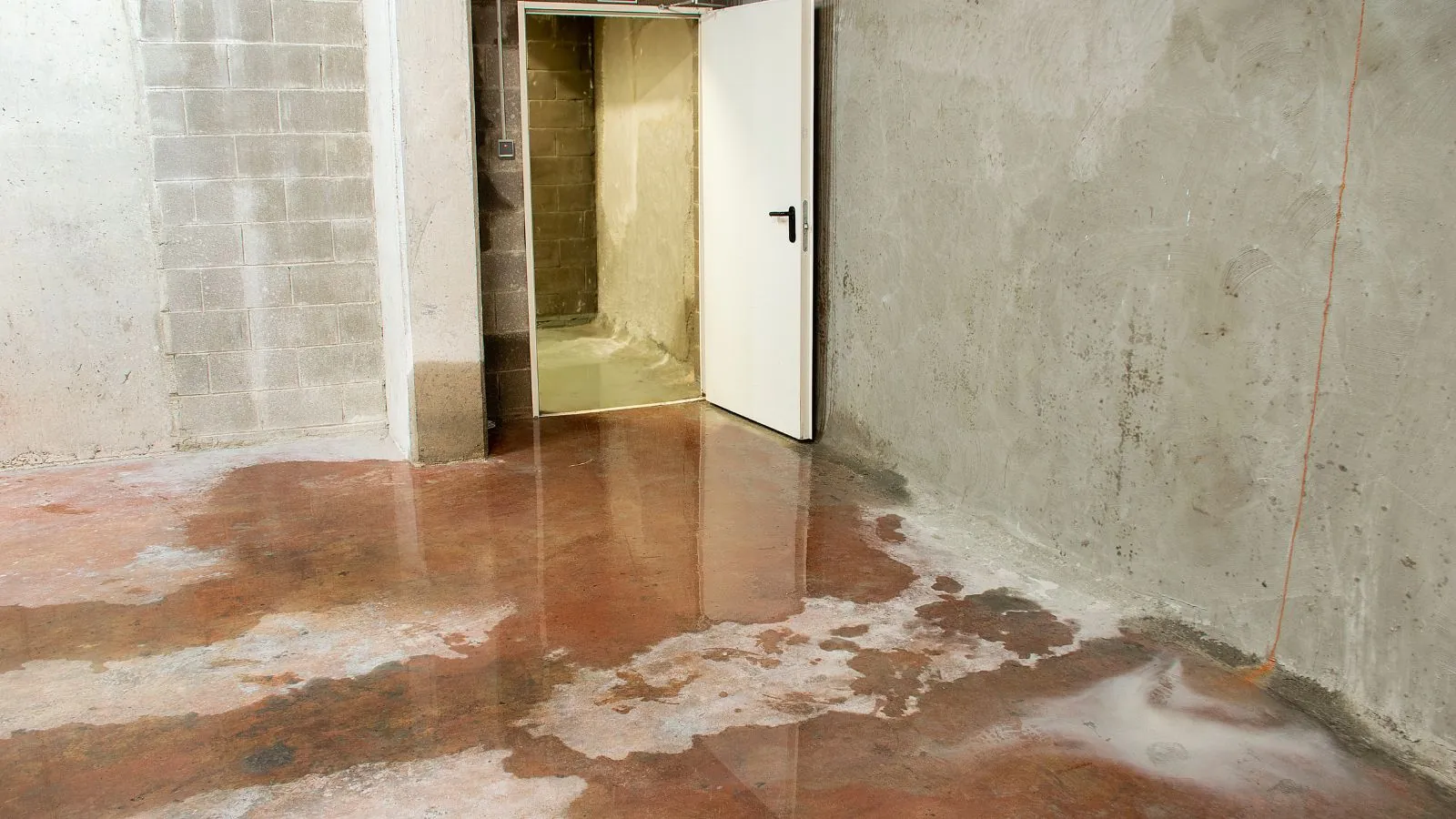
Basement water damage in Saint James, NY is water that has entered the below-grade level of a home, whether through a failed sump pump, seepage in the walls or floor joint, or a backed-up drain. Our 24/7 line is (934) 223-1875.
We know the water keeps rising while you wait. Before you go downstairs, check the panel, the water level on the stairs and whether the floor drain smells, then lift what you can off the floor from dry ground.
Why basements here take on water
A basement sits below the soil line, so water can come at it from the sides, from the top and from underneath. Rain soaks the soil beside the foundation, a high water table presses up through the slab, and a sump pit can fail at exactly the moment it is needed most, during a storm with the power out.
The Suffolk County Hazard Mitigation Plan calls groundwater flooding a major concern in the Town of Smithtown. It also describes a Town retention project at the Saint James railroad station parking lot and a preliminary design for a recharge basin near Moriches Road to reduce flooding. Those works are aimed at an area, not at your foundation, so a wet basement still needs its own check of the sump, gutters and grade.
Listings for some homes in Hamlet Estates describe finished walk-out basements, which is worth knowing before a leak starts.
Basement water emergency steps right now
The basement is where the panel, the furnace and the water heater usually live, so start with safety.
- Stop the supply if the water is clean and from a pipe by closing the main valve. If rain or groundwater is the cause, skip this and move on.
- Do not step into water that is above the bottom stair or that could reach outlets, cords or the panel. If you cannot reach the breaker dry, call PSEG Long Island at 1-800-490-0075 to shut power off at the meter.
- Do not turn off the gas meter. If you smell gas or the furnace or water heater was under water, leave and call for help.
- Check that the sump pump is plugged into a working outlet and that the discharge line outside is clear, but only if you can do it from dry footing.
- Move valuables, documents, electronics and cardboard boxes upstairs or onto high shelves.
- If the water is dark or smells like a drain, stay out and keep children and pets away. Wear rubber boots, waterproof gloves and an N95 for any contact, and never mix bleach with ammonia.
Septic and slow drains
Many homes here are on private septic or cesspool systems, so check if yours is. New York State Department of Health guidance says that if floodwater covers a septic tank or drains are slow, avoid using toilets and washing machines and do not have the tank pumped.
Where water enters, the sign and the fix category
The way in decides who fixes it. Restoration crews dry and clean, while other trades handle the building itself.
| Where water enters | Sign | Fix category |
|---|---|---|
| Floor and wall joint | Water beads along the edge of the slab after rain | Waterproofing contractor for interior drainage or grading, restoration to dry |
| Cracks in poured or block walls | Wet streaks, white mineral powder on the wall | Crack repair by a waterproofing contractor, restoration to dry |
| Sump pit | Pit overflowing, pump humming without moving water, or silent | Plumber for the pump, a backup system if power fails, restoration after |
| Window wells | Water pooling below a basement window | Gutters, grading or well drainage by a contractor, restoration to dry |
| Floor drain or sewer line | Gray or dark water, a strong odor, slow fixtures | Plumber and sewage backup cleanup |
| Rising through the slab | Damp slab with no pipe nearby, worse after storms | Waterproofing contractor for drainage, restoration to dry |
| Supply line or water heater | Clean water from one spot, wet wall or tank base | Plumber to repair, then restoration |
Finished basements, contents and what can be saved
A finished basement has more places for water to hide. Carpet pad, baseboards, bottom-cut drywall and wall insulation all soak up water and hold it against the framing. Crews pull the pad, remove baseboards, and use a moisture meter and thermal imaging camera to find wet drywall and cavities.
Solid wood furniture and hard items are often cleaned and dried. Upholstery, cardboard storage and particleboard shelving that sat in water usually are not worth saving. Photograph and list everything before it is thrown out, since your insurer may ask. If the water was dirty, the sewage backup cleanup page explains why contents are treated more strictly.
Pump-out, drying and the water heater and furnace
Standing water comes out first with submersible pumps and extraction units, as laid out on the water extraction page. Then air movers and LGR dehumidifiers run while readings are taken daily, and small holes can be drilled at the baseboard so warm dry air reaches the wall cavity. Ask any company whether its crews work to ANSI/IICRC S500.
Fuel-burning equipment needs a closer look. National Grid says flood-damaged heating and cooling equipment in most cases has to be replaced, not repaired, and a water heater exposed to floodwater should be replaced. If only a tank leaked, see water heater leak cleanup. A licensed electrician must inspect before power is restored to anything that was wet.
Restoration is not waterproofing
Be clear on the difference. We dry the basement, remove what the water ruined and clean it, but we do not fix the reason water got in. If water returns with every heavy rain, beads along the floor joint, comes through a crack, or the sump runs constantly, call a waterproofing contractor once the space is dry. Doing the work in that order keeps new drywall and flooring from going into a room that will flood again.
What affects the cost of basement water damage
A basement with an inch of clean water and a bare floor is a different job from a finished room with contaminated water. These factors set the price.
- Water category, because rain, groundwater and sewage are handled differently
- Affected area, including the depth of water and how much wall and floor it reached
- Materials, such as carpet, pad, drywall, insulation and stored contents
- Drying days and equipment, covering pumps, air movers, dehumidifiers and daily readings
- Rebuild scope, from replacing baseboards to rebuilding finished walls
Insurance and getting a number
Sudden and accidental water damage is often covered, while gradual seepage and neglect often are not, and flood is usually excluded and needs separate flood coverage, so check your policy. A new flood policy typically has a 30-day waiting period, per FEMA. Call (934) 223-1875 and the scope and price are explained before work starts. We also serve Smithtown basements. For other surface water see flood damage cleanup.
Frequently asked questions
Do you handle basement water emergencies at night or on weekends in Saint James?
Yes. Dispatch is 24/7, so a sump failure at midnight or a Sunday seep gets an answer. Same-day response is offered when available, and no arrival time is promised.
My sump pump failed. What do I do now?
If water is rising, stay out of it near outlets and the panel, and call the 24/7 line. Check the pump's plug and breaker only from dry footing. A crew can pump out the basement, but the pump itself is a plumber's repair.
Is water coming through the wall or floor joint covered by insurance?
Seepage that builds up over time is often excluded, while sudden and accidental water damage may be covered, and flood is usually excluded. Policies differ, so read yours and ask your insurer. New York DFS says to document the loss before cleaning.
Can I save my finished basement carpet?
Sometimes, if the water was clean and it is lifted quickly. Pad is usually discarded. Carpet that sat in dirty water is typically removed. A meter reading of the subfloor tells you whether it is safe to re-lay.
Will you waterproof my basement?
No. Restoration dries and cleans the damage. Waterproofing, grading and drainage are separate trades, and you should call that contractor if water keeps coming back.
Should I turn off the gas if the basement flooded?
Do not shut the gas meter off yourself. National Grid says not to. If you smell gas or heating equipment was submerged, leave the house and call for help.
Is the Town's flood work going to keep my basement dry?
The county plan describes a retention project and a preliminary basin design in the area, but they are not a promise about any one basement. Check your own sump, gutters and grading.