
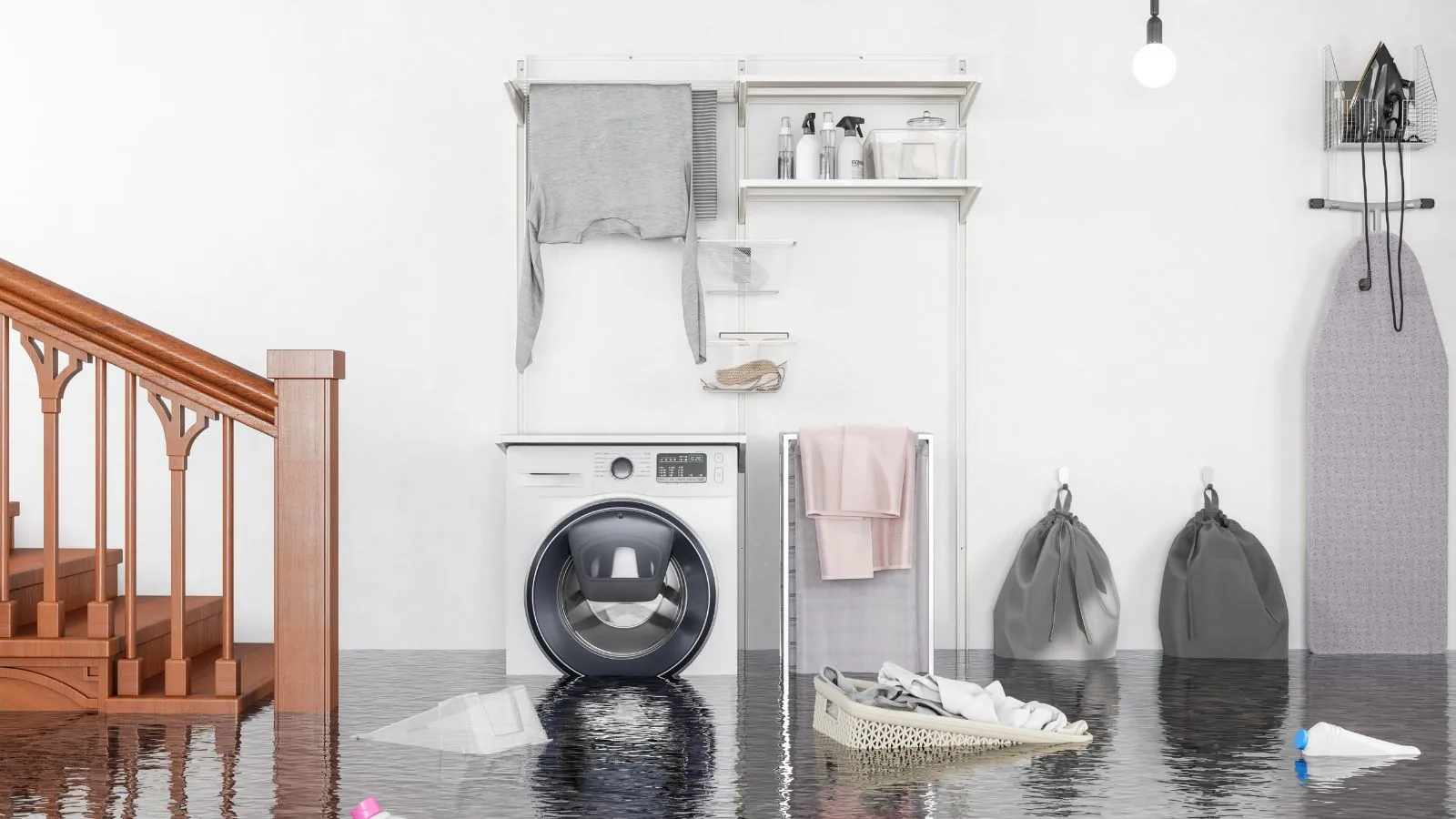
If a washer, dishwasher or refrigerator is leaking right now, pull its plug if the floor is dry and turn off its water valve before anything else. Our 24/7 dispatch line is open once the water is under control, and a crew can start removing the water and drying what the leak soaked.
Appliance leak water damage in Saint James, NY is the wetting of flooring, cabinets, subfloor and walls by water from a household appliance. The cause is usually a hose, a line or a drain, and the damage often spreads far beyond the machine.
Why a small leak behind an appliance costs more than the appliance
The Census reports a median value of $652,700 for owner-occupied homes in Saint James, and 87.7% of homes here are owner-occupied. Many of those homes have finished hardwood, tile over plywood or built-in cabinets around the kitchen and laundry room. A slow drip behind a dishwasher can ruin a cabinet base and a section of floor before you notice any water.
The practical result is that the appliance is often the cheaper part of the loss. A new washer hose costs little, but swollen cabinet toe-kicks, cupped boards and wet subfloor are costly to dry and repair. Because you own the house, you also carry the repair, so catching the leak early is worth more than replacing the machine.
Find the source first, then decide what is wet
Each appliance leaks at different points, and the source tells a crew where the water traveled. Water from a supply hose runs under pressure and soaks fast. Drain water arrives in bursts and carries soap and food, which makes it dirtier than clean supply water.
Washers leak at the rubber supply hoses, the drain standpipe and the pump housing. Dishwashers leak at the inlet valve, the door gasket and the drain hose under the sink. Refrigerators leak at the plastic ice-maker line, a loose compression fitting or a clogged defrost drain. Condensate pumps from dehumidifiers and furnaces fail when the float sticks or the discharge tube kinks.
| Appliance | Typical leak point | What to check |
|---|---|---|
| Washing machine | Rubber supply hoses, drain hose, standpipe overflow | Look behind the machine, check the hose age and look for bulges at the hose ends |
| Dishwasher | Inlet valve, door gasket, drain hose under the sink | Pull the toe-kick panel and check for water on the subfloor beneath |
| Refrigerator with ice maker | Plastic ice-maker line, saddle valve, fill-valve fittings | Move the fridge and look for a damp spot or a stain on the floor behind it |
| Condensate pump | Stuck float, cracked reservoir, kinked or disconnected discharge tube | Check the reservoir for water and trace the discharge tube to its end |
| Water heater or softener nearby | Fittings and drain valves | Look for rust or mineral crust around connections |
Signs the leak has already spread
You may not see a puddle. Moisture from an appliance leak often travels under flooring and into the base of the cabinet, where it stays hidden. Watch for these signs before assuming the problem is minor.
- Floorboards that cup, crown or lift at the edges, especially near the dishwasher or washer
- Cabinet toe-kicks or sides that swell, soften or show a dark line
- A musty smell in the kitchen or laundry room that does not clear after cleaning
- A water bill that rises with no change in use
- Paint that bubbles or drywall that feels cool and soft near the baseboard
How the leak is dried, step by step
A crew finds the extent with a moisture meter and a thermal imaging camera, then pulls the toe-kicks, baseboards and any flooring that is wet through. Standing water goes out with an extraction unit. Water that came from a drain or washer is often handled as contaminated water, using the categories in ANSI/IICRC S500, the published standard for water damage.
Drying cabinets and floors in place is possible when the damage is caught early. Injectable drying systems blow warm air through small holes into cabinet bases and wall cavities, while air movers and an LGR dehumidifier pull moisture from the room. Hardwood needs slow, controlled drying, and our page on hardwood floor water damage repair covers when boards can be saved.
If cabinets have swollen particleboard, they are usually replaced, because that material does not recover. A kitchen with wet cabinets and flooring is a bigger project, described in kitchen water damage restoration.
Dry it, repair it or replace it, the honest options
Drying in place costs less and keeps your finishes, and it works when the leak was short and the materials are solid wood or tile. It fails when particleboard has swollen or when the subfloor is soaked through, because swollen board stays weak even after it dries.
Removing the floor and cabinet bases costs more but lets crews dry the subfloor and framing completely. This is the better route after a long, slow leak, a drain leak or any hidden leak found only by smell or a stain. A plumber or appliance technician fixes the appliance itself, and that repair should happen before the drying starts, or the leak will keep feeding the damp.
If you plan to move plumbing or replace walls, ask the Town of Smithtown Building Department if a permit applies. Crews work across Saint James and nearby towns like Nesconset, where the same kinds of leaks show up.
An appliance is leaking right now, urgent steps
Take these steps in order and skip any that put you near wet electrical parts. Water and a plugged-in appliance are a shock risk.
- Reach for the shutoff valve behind or under the appliance and close it. For a washer, that is the two hose valves on the wall.
- If the floor is dry where the plug sits, unplug the appliance. If you must stand in water to do it, switch off that circuit at the panel instead, or leave it alone.
- Turn off the home's main water valve if you cannot find the appliance valve or the water keeps coming.
- Pull towels along the edge of the water and lift rugs, boxes and anything stored on the floor.
- Do not run the appliance again, and do not run the washer or dishwasher drain if the floor drain is backing up.
- Photograph the appliance, the hose and the wet floor, since NY Department of Financial Services advises documenting losses before cleaning up, then call us.
What affects the cost of appliance leak repair
A real figure comes after someone measures the moisture. These factors set the size of the job.
- Water category, because supply water costs less to handle than washer or dishwasher drain water
- Affected area, including how far the water went under cabinets and flooring
- Materials, such as hardwood, tile, laminate or particleboard cabinets
- Drying days and equipment, including injectable systems and dehumidifiers
- Rebuild scope, from cleaning and drying to new cabinet bases and flooring
Insurance and getting a real number
Sudden and accidental water damage is often covered, while gradual leaks and neglect often are not, which matters because many appliance leaks are slow. Check your policy or ask your insurer how it treats a hose that failed over time.
Call the 24/7 line and describe the appliance, the room and how long it has been leaking, and the dispatcher can explain the scope and price before work starts.
Frequently asked questions
Do you handle appliance leak emergencies at night or on weekends in Saint James?
Yes. The dispatch line runs 24/7, including weekends and holidays, and we offer same-day response when available. We do not promise an arrival time, so use the wait to close the valve, lift belongings and mop up the edges.
Do you repair the washer, dishwasher or refrigerator?
No. An appliance technician or plumber repairs or replaces the machine and its lines. Dispatched crews dry the floor, cabinets and walls the water reached, and the two jobs can run together.
How can I tell if a leak is behind my dishwasher?
Look for a swollen toe-kick, a cupped floor near the machine and a musty smell. Pull the lower panel and shine a light on the subfloor. A moisture meter finds wet spots you cannot see.
Are rubber washer hoses a risk?
They are a common failure point because they weaken at the ends and bulge before they split. Check them behind the machine, and replace old hoses before they fail. Any leak from one runs under pressure and can wet a large area.
Can an ice-maker line really cause serious damage?
Yes. A thin plastic line can drip for weeks behind a refrigerator and soak the floor, the cabinet next to it and the wall. It often goes unnoticed until the floor cups or a stain appears.
Will insurance cover an appliance leak?
It depends on whether the leak was sudden and accidental or gradual, and on your policy. Ask your insurer. We cannot promise coverage or approve a claim.