
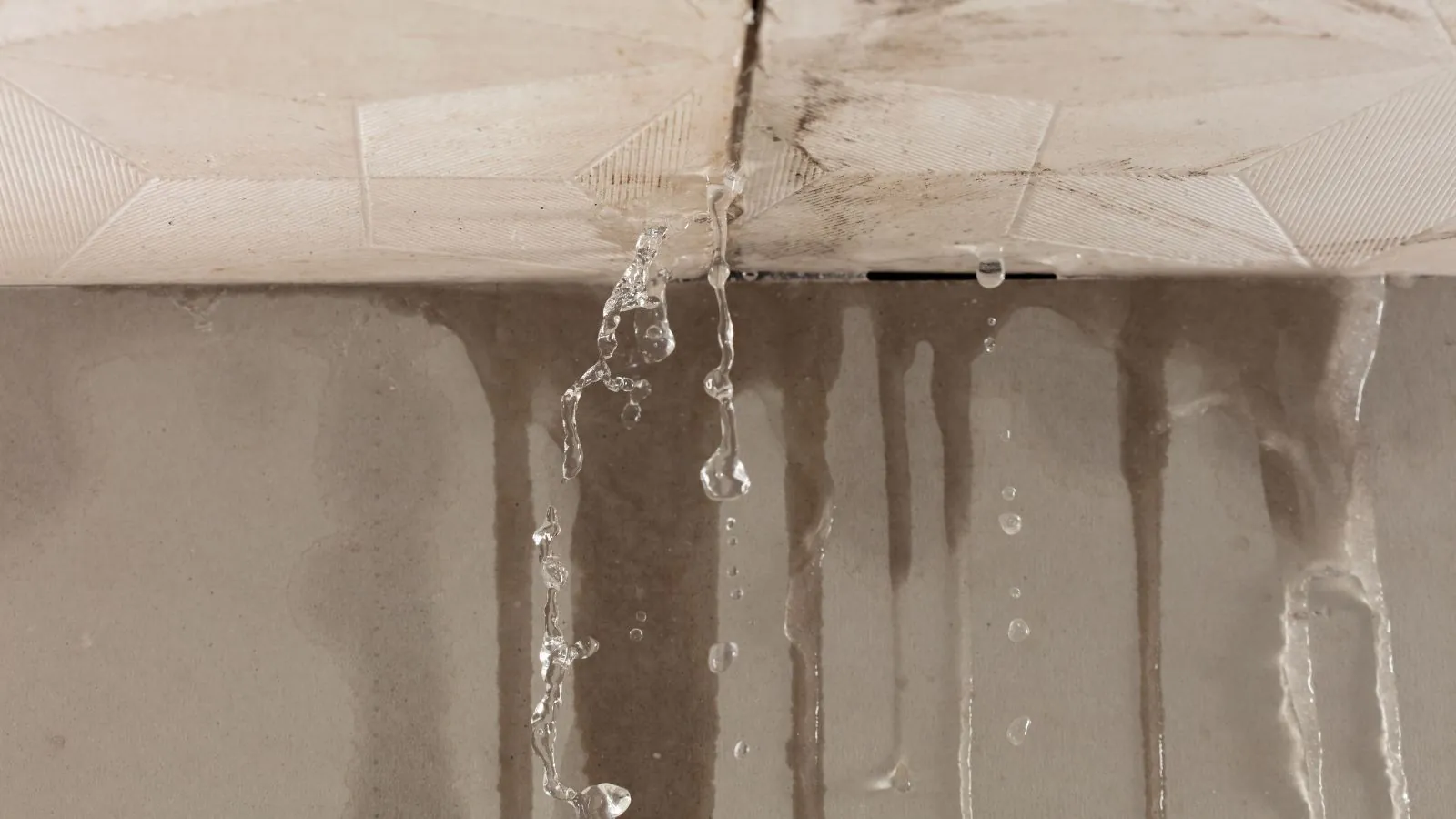
Storm water damage in Saint James, NY is rain that gets inside a building through the envelope, meaning the roof, siding, windows, doors and flashing, or through a hole a falling tree has opened. Our 24/7 line is (934) 223-1875.
While you wait, stay out of rooms where a ceiling is sagging, keep clear of fallen wires, and cover furniture and electronics with plastic. Take photos of the damage as soon as it is safe, since your insurer will want to see it.
Where storm water gets into a building
Wind changes where rain goes. Instead of falling straight down, it is pushed sideways and upward, under siding laps, behind flashing, around window frames and beneath door thresholds. Shingles can lift or tear away, and a chimney or vent boot can pull loose. A tree limb can punch through roof decking in seconds.
The Suffolk County Hazard Mitigation Plan says wind damage to trees and structures in the Town of Smithtown from Hurricane Sandy in 2012 was greater than flood damage. After a big wind event, then, check the roof, siding and windows first, not just the yard and the basement.
Storm damage emergency steps while the weather is still active
Safety comes ahead of salvage. Do not climb onto a wet roof in the wind.
- Move out of any room with a bulging ceiling or a wall that is dripping. A saturated ceiling can drop without warning.
- Treat every downed wire as live and stay well away. If a tree is lying on the house, do not go near it until it is stable.
- Shut off power to a wet room at the breaker only if the panel is dry and you can reach it standing on dry ground. If you cannot, call PSEG Long Island at 1-800-490-0075 to cut power at the meter.
- Set buckets under drips, lay towels along wet window sills, and pull furniture and electronics toward the center of the room.
- Take photos and video of the damage from the inside and, when it is safe, from the ground outside.
- Call the 24/7 line and describe where the water is entering, so the dispatcher can plan for tarping, extraction and drying.
Alerts and drinking water
To get Suffolk County alerts on your phone, text SuffolkAlerts to 67283. After a storm, the Suffolk County Office of Emergency Management advises avoiding tap water until you are sure it is not contaminated, and its number is 631-852-4900.
Storm entry point, signs and temporary protection
Find where the water came in and it becomes easier to describe the loss to a dispatcher, a roofer and your insurer. This table pairs each entry point with the signs and the stopgap that fits.
| Storm entry point | Signs | Temporary protection |
|---|---|---|
| Roof covering lost to wind | Missing shingles, wet attic insulation, brown stains on the ceiling below | Heavy-duty tarp lapped over the ridge and fastened to solid decking |
| Flashing at a chimney, vent or valley | Stains along a wall corner or around the chimney breast, drips during gusts | Roof tape or a tarp over the joint, placed by someone trained to work at height |
| Siding or sheathing torn open | Wet exterior wall inside, bubbling paint, water behind the siding | House wrap or plastic sheeting taped over the exposed sheathing |
| Window frame or broken glass | Water on the sill, wet drywall under the window, cracked panes | Plywood screwed into the frame or plastic sheeting taped around the opening |
| Door or threshold | Wet floor just inside the door, swollen trim | Plastic taped over the gap and a rolled towel at the threshold |
| Tree strike | Broken decking, a hole in the roof, torn siding, debris inside | Tarp and plywood over the hole once the tree is stable, and keep everyone out of the room below |
How storm water damage is cleaned up and dried
A crew starts by finding every wet area, which is more than the stained ceiling suggests. Moisture meters read the drywall and framing, and a thermal imaging camera picks out wet insulation above the ceiling and inside exterior walls. Rain that has passed through insulation and dust is not clean, so crews treat it as dirty until it is assessed.
Standing water is extracted with pumps and extraction units. Soaked insulation, ceiling drywall and carpet pad are removed, and air movers and LGR dehumidifiers are set to dry what remains. The process, the readings and the goals are explained on the structural drying page, and ANSI/IICRC S500 is the published standard to ask about.
Storm damage, flood and roof leaks are different jobs
This page covers water that comes down and in through the building shell. Water that rises from the ground, backs up or floods a yard is a different loss with different contamination rules, and it is handled under flood damage cleanup.
A roof that drips in ordinary rain with no storm damage is also a separate question. The ceiling water damage page covers leaks that come through a finished ceiling. Which one applies matters for your insurer, because wind damage and flood are treated very differently.
Tarping, roofers and who does the permanent repair
Restoration crews dry and clean what the storm wet. A roofer, siding contractor or window installer fixes the opening. Ask the dispatcher whether the crew can place the temporary cover or if you need a roofer for it, and arrange the permanent repair as soon as the weather allows.
Rushed permanent repairs over wet materials can trap moisture, so have the area read with a meter first. In August 2024, the National Weather Service issued a flash flood emergency naming Smithtown and Stony Brook, with 6 to 10 inches of rain overnight and rates of 2 to 3 inches in an hour. At those rates, gutters, flashing and window seals get tested hard, and old weak spots show up. Check them after every heavy event.
Safety checks after a storm
Storm cleanup carries hazards that ordinary leaks do not, so slow down and check these first.
- Stay out of rooms where water has reached outlets, appliances or cords
- Do not climb onto a wet roof or ladder in wind or rain
- Treat floodwater as contaminated and wear boots and waterproof gloves
- Avoid drinking tap water until you are sure it is safe if local officials advise it
- Photograph the damage before moving anything
When to call 911 instead
Call 911 for downed power lines, a gas smell, rising water around trapped people or a roof that is moving. Stay away from any wire that is down.
What affects the cost of storm water damage
Storm losses range from one wet window wall to a whole roof system. These factors set the scope.
- Water category, since rain that sat in insulation and building materials is treated differently from clean water
- Affected area, such as how many rooms, ceilings and wall cavities are wet
- Materials, including attic insulation, ceiling drywall, flooring and trim
- Drying days and equipment, covering extraction, air movers, dehumidifiers and daily readings
- Rebuild scope, including the roof, siding or window work done by other trades
Insurance and getting a number
Sudden and accidental storm damage is often covered, while neglected or gradual damage often is not, and flood is usually excluded and needs separate flood coverage, so check your policy. Call (934) 223-1875 and the scope and price are explained before work starts. We also dispatch to Nesconset and nearby towns.
Frequently asked questions
Do you handle storm water damage emergencies at night or on weekends in Saint James?
Yes. The dispatch line runs 24/7, so a call during a night storm or on a holiday weekend gets answered. Same-day response is offered when available, and no arrival time is promised, because road conditions and crew demand change during storms.
What is the difference between storm water damage and flood damage?
Storm damage is water that comes in through the roof, siding, windows or doors, or through a hole a tree has made. Flood damage is water that rises from the ground or backs up from outside. They are cleaned differently and insurers treat them differently.
A tree hit my house. What do I do first?
Get everyone out of the room below the damage, keep clear of any wires, and do not move the tree. Call your utility if lines are down, then call the 24/7 line so a crew can plan for tarping and drying.
Should I tarp the roof myself?
Not in wind or on a wet roof. The fall risk is real and a poorly fastened tarp can blow off. Cover the room inside with plastic and let a trained crew handle the roof once it is safe.
How do I sign up for SuffolkAlert?
Text SuffolkAlerts to 67283 from your phone. The county uses the service for emergency notices, so it is worth doing before the next storm.
Does homeowners insurance cover wind-driven rain?
Often, when the storm damaged the building and let the rain in, but policies differ. Check your policy, ask your insurer, and document the damage before cleaning anything up. New York DFS says to file claims as soon as possible.