
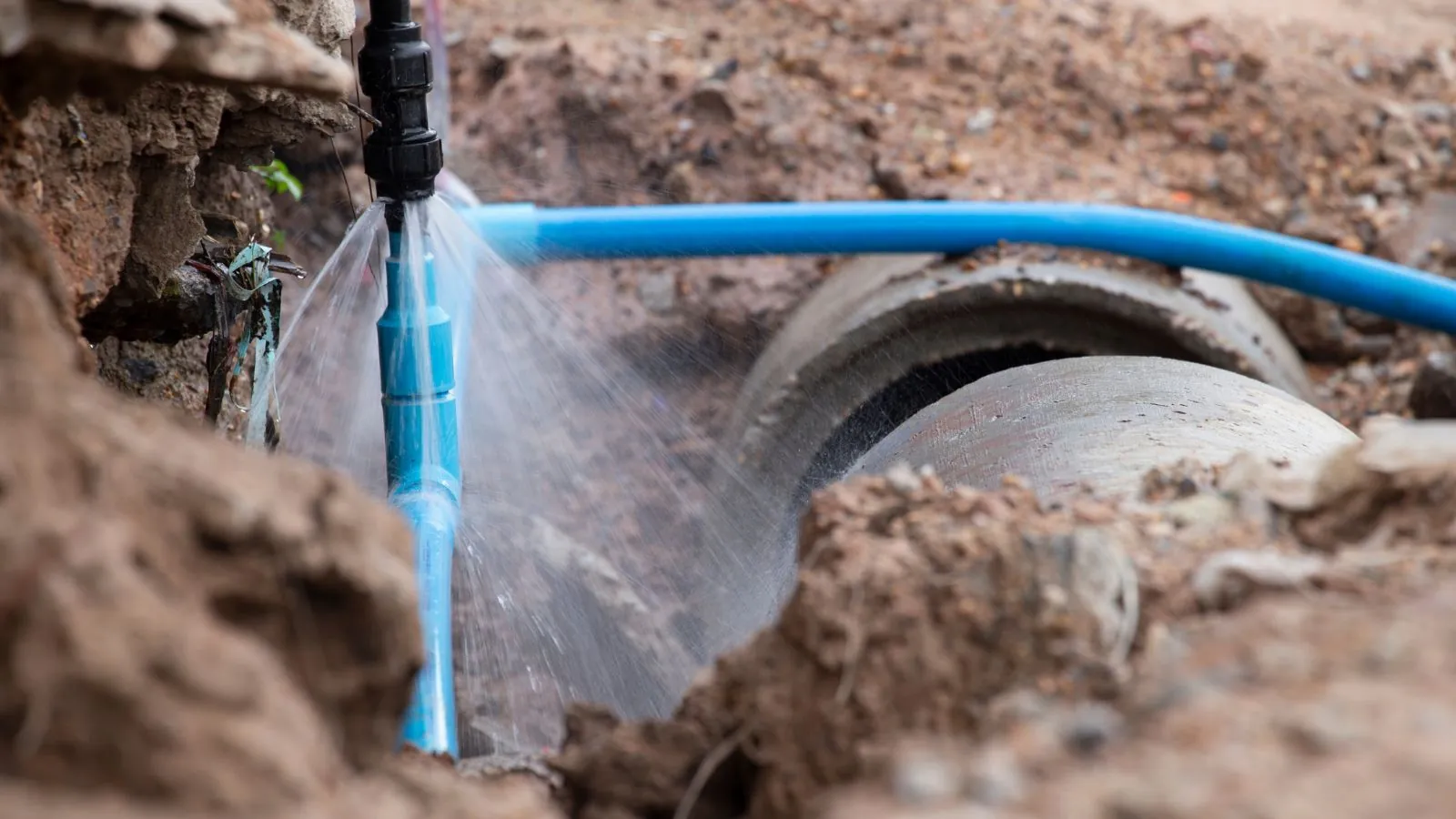
Turn the main water valve clockwise until it stops, then open the lowest faucet in the house to drain what is left in the lines. Once the flow has stopped, the 24/7 dispatch line can send a licensed and insured crew while you keep photographing the damage. Burst pipe water damage in Saint James, NY is what a pressurized supply line leaves behind when it splits inside a wall, ceiling or cabinet.
Household pressure keeps pushing water out of the break all day, which is why a small split can soak a wall cavity before any stain shows.
Why pressurized lines fail where nobody can see them
Supply pipes split from freezing, corrosion, a failed fitting or a pressure spike, and they almost always sit behind drywall, under cabinets or above a ceiling. A drain leak stops when the fixture stops, but a supply line under pressure does not stop on its own. Every minute it runs is more water in insulation and framing.
Your house shutoff can seize, leak or sit buried behind stored boxes. The curb stop near the street is the backup, and it usually needs a long-handled wrench or curb key. Ask your water district where yours is, the Saint James Water District if that is your supplier, and whether homeowners are allowed to operate it. Then keep a wrench by the basement stairs so you are not hunting for one while water runs.
Signs a supply line has let go
Some breaks are loud and obvious. Others show up as small clues that add up.
- The sound of running or hissing water when every fixture is off
- A water meter dial that keeps turning after everything is closed
- Sudden low pressure or sputtering at faucets
- Paint that bubbles, wallpaper that peels or drywall that feels soft at the bottom
- A ceiling stain that grows or a ceiling that sags and bulges
- A warm patch on the floor, which can mean a hot water line is leaking
Where the pipe burst and how the water spreads
The location of the break decides which materials are wet, so it also decides how much has to be opened up.
| Where the pipe burst | How the water spreads | What to check first |
|---|---|---|
| Inside a wall cavity | Runs down the stud bay, soaks insulation and pools on the bottom plate before showing on the floor | Baseboards, the wall on the other side and the room below |
| Under a kitchen or bath sink | Fills the cabinet base, then seeps under flooring and into the subfloor | Cabinet floor, toe-kick, and vinyl or tile seams near the sink |
| In the ceiling above a finished room | Collects on the drywall, then drops through light fixtures and seams | Light fixtures, the sagging spot and the floor below |
| Behind a washer or fridge | Travels along the floor to the lowest point, often hidden under the appliance | The floor under the appliance and the nearest wall |
| In an upstairs wall | Falls floor to floor through gaps around pipes and wiring | Ceilings and walls on every level beneath the break |
How crews find the break and dry the structure
Once the water is off, a licensed plumber repairs the pipe and the restoration crew deals with the water. The crew starts with pinless and pin moisture meters, plus a thermal imaging camera that picks out cooler wet drywall and insulation without cutting anything open.
Standing water goes first, using the methods on the water extraction page. Wet insulation and soaked drywall come out through small flood cuts, usually a few inches to two feet above the water line. Air movers, LGR dehumidifiers and sometimes an injectable drying system for enclosed cavities then run until the meters show dry readings. ANSI/IICRC S500 is the published water damage standard, so ask any company whether its crews follow it.
Options, trade-offs and permits
A plumber can repair the one split or replace a longer run of aging pipe. A spot repair costs less today but leaves old pipe behind, while a larger replacement opens more wall and takes longer. Whichever you pick, finish the drying before the wall is closed, because sealed wet framing is where mold starts.
Plumbing permit questions go to the Town of Smithtown Building Department, and its online applications include a Plumbing Only option. The Town's page says nothing specific about water damage repair, so ask if the repair needs a permit before work begins. Opened walls are repaired afterward, as covered on the wall and drywall page, and ceiling breaks follow the ceiling repair page.
What drives the cost of burst pipe damage
The pipe break itself is a small part of the picture. These factors set the scope.
- Water category, which is usually clean at first but worsens the longer it sits
- Affected area, from one wall bay to several rooms across two floors
- Materials, since insulation, drywall, hardwood and cabinets are priced very differently
- Drying days and equipment, including air movers and dehumidifiers
- Rebuild scope, such as drywall, paint, flooring and trim
The pipe is spraying right now, step by step
Move through these in order and do not stop to clean up until the water is off.
- Close the main valve all the way. If it will not turn, go to the curb stop with your wrench.
- Open the lowest faucet and the highest faucet to drain the lines, and flush each toilet once.
- Switch off the water heater at its breaker or gas control so its heating elements do not run dry.
- Set buckets under drips. If a ceiling bulges, move people out from under it and place a container beneath.
- Photograph the damage and the broken pipe before moving anything.
- Lift furniture legs onto blocks or foil, and pick up rugs, electronics and paper from the wet area.
Water near wiring
If water is dripping through a light fixture or reaching outlets, switch off that circuit at the panel only if the panel and the floor you stand on are dry. Otherwise stay out of the room and ask PSEG Long Island at 1-800-490-0075 about shutting power off at the meter.
Insurance and a real number
Sudden and accidental water damage is often covered by a homeowners policy, and gradual leaks and neglect often are not, so check your policy before you decide anything. Ask your insurer what it needs documented and keep the broken pipe section if you can.
To get a real figure, call the 24/7 line and describe where the pipe burst, and the scope and price are explained before any work starts. Crews also serve Nesconset and other nearby towns.
Frequently asked questions
Do you handle burst pipe emergencies at night or on weekends in Saint James?
Yes. The dispatch line is staffed 24/7, including nights, weekends and holidays, and same-day response is offered when available. No arrival time is promised, so shut the main, drain the lines and photograph the damage while you wait.
Should I shut off water at the street or inside the house?
Start with the main valve inside the house, since it is the closest and fastest. If it will not close or leaks, use the curb stop at the street. Ask your water district where it is and if you may operate it.
Who repairs the broken pipe, you or a plumber?
A licensed plumber repairs or replaces the pipe. The restoration crew removes the water, opens wet walls and dries the structure. Doing both in the right order keeps new drywall from being closed over wet framing.
How long does a wall take to dry after a pipe bursts?
Drying is measured in days, not hours, and depends on the materials, the amount of water and how quickly extraction started. The crew keeps equipment running until moisture meter readings match dry reference readings.
Do I need a permit to replace the burst pipe?
Ask the Town of Smithtown Building Department. Its online applications include Plumbing Only, but its page does not address water damage repair specifically, so confirm with the department before work begins.
Will my insurance cover a burst pipe?
Sudden and accidental bursts are often covered, while slow leaks and long-term neglect often are not. Check your policy, document everything and ask your insurer what applies.