
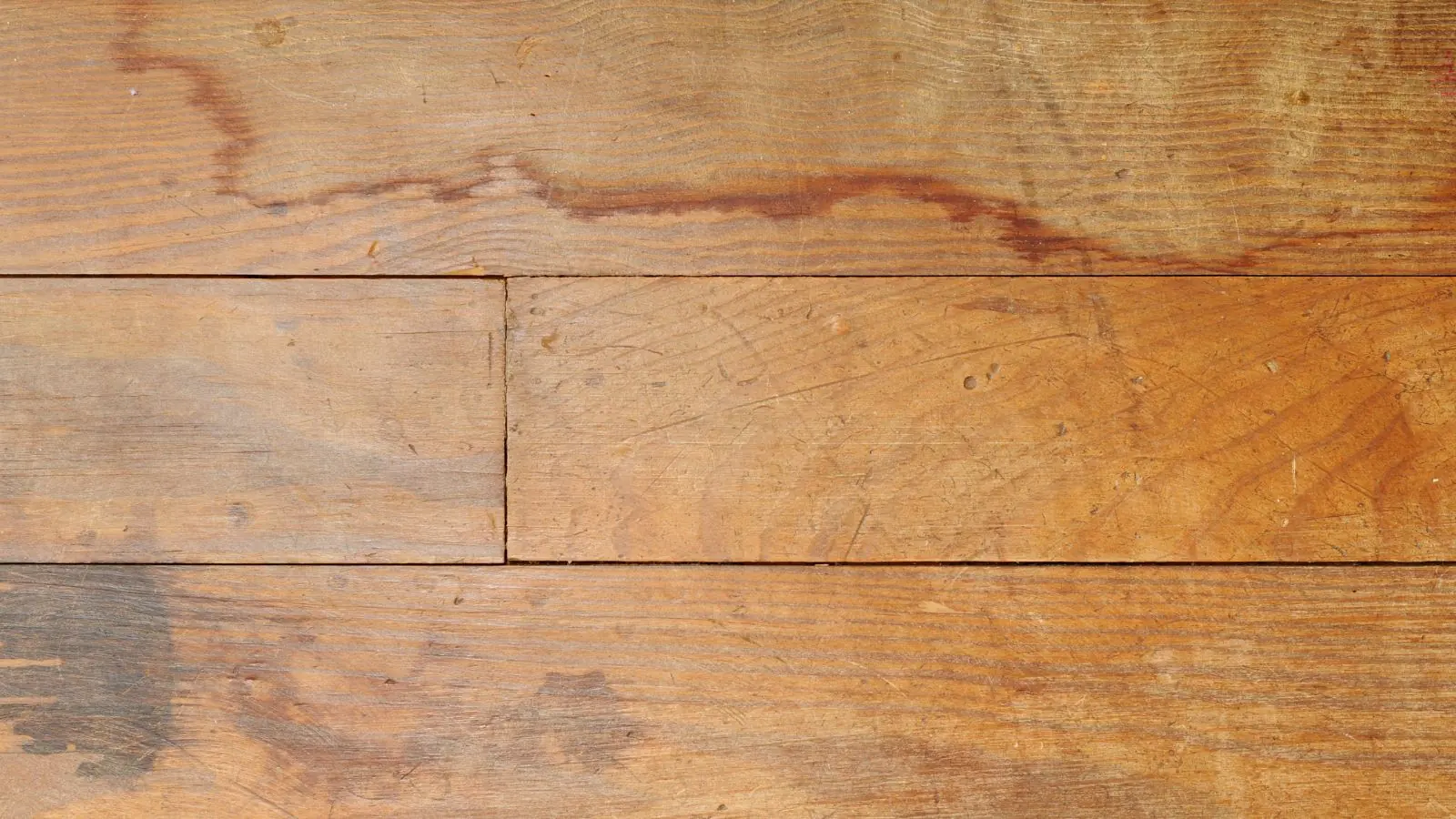
Hardwood floor water damage in Saint James, NY is moisture that has entered the boards from above or from below, causing them to swell, cup, stain or lift off the subfloor. Wood takes on water slowly and gives it up slowly, so the floor you see on day one is not the floor you have by day five.
This page covers solid, engineered and laminate floors and the choice between drying in place and replacing. If water is still standing on the boards, water extraction comes first.
Why wood floors react to water the way they do
Wood is hygroscopic, which means it trades moisture with the air and with anything wet beside it. Boards drink water through the seams, the ends and the underside, then expand across the grain. Because a nailed floor is locked in at the walls, that expansion has nowhere to go but up.
Water reaches the floor from a few directions. A burst line or appliance overflow wets it from above, while a damp slab or an unvented space below wets it from underneath. A wet crawl space is a common cause of cupping, because the underside of every board stays wetter than the top.
Cupping, crowning, buckling and the other signs
The shape of the damage tells you where the water came from and how far along it is. Put a straightedge across several boards and look for light underneath. A floor that was flat last month and rocks under a straightedge now has taken on moisture.
- Cupping, where board edges sit higher than the center, usually means the underside is wetter than the top
- Crowning, where the center rises above the edges, shows up when a cupped floor is sanded before it is dry or when the surface was wetter than the bottom
- Buckling, where boards lift off the subfloor in a ridge, means the wood has expanded until it pulled loose from its fasteners
- Staining, gray or black marks, comes from long contact with water or a reaction with metal in the wood
- Gaps between boards usually appear later, once swollen wood shrinks back during drying
How a wet hardwood floor is dried
The first step is measurement. A pin moisture meter reads the boards, a second reading goes on the subfloor, and a third is taken from a dry part of the house so the crew knows the target. A thermal imaging camera helps show how far the water traveled under the finish.
Floor drying mats and panels do the heavy lifting. They seal over the boards and pull moisture up through the seams and the face of the wood with low-pressure suction, which is far gentler than blowing hot air across the surface. Sometimes a few boards along a wall are lifted so air can reach the subfloor.
Subfloor drying runs alongside. Plywood or OSB under the boards, and any insulation beneath it, gets air movers and LGR dehumidifiers so it does not re-wet the floor from below. The same mapping and daily logging used in structural drying shows when the readings have flattened out.
Solid, engineered and laminate floors compared
The floor type changes both the odds and the repair. Check the underside of a floor vent cover or a threshold edge to see whether the board is solid wood all the way through or has layers.
| Floor type | Water response | Repair path |
|---|---|---|
| Solid hardwood, nailed | Swells, cups and can buckle, but it is wood throughout and tolerates drying and sanding | Dry with mats or panels, then sand and refinish once readings are stable |
| Engineered hardwood | The layered core swells and can delaminate, and the thin top layer limits how much sanding is left | Dry if the planks stay flat, replace planks where the layers have separated |
| Glued-down hardwood | The adhesive bond can fail, so boards may lift in sections even when the wood itself is fine | Replace the lifted sections and dry the slab or subfloor first |
| Laminate | The fiberboard core swells at the edges and does not return to its original thickness | Usually replaced, with the subfloor dried before new planks go down |
Dry in place or replace, and what Saint James home values mean for the choice
The Census QuickFacts median value of owner-occupied homes in Saint James is $652,700. At that value, existing hardwood is often worth saving, so ask for moisture readings and a drying plan before you accept a tear-out, and request a replacement scope next to it so you can compare the two.
Sanding waits until readings are stable. Mild cupping often flattens as the floor dries, and sanding too early traps moisture and leads to crowning. Replacement makes sense when boards have buckled off the subfloor, the layers of engineered planks have separated, black staining runs through the wood, or the subfloor beneath needs to come out.
What to do while the floor is still wet
Wood forgives a lot, but not heat, weight or delay. A few quick moves help the floor more than most repairs do later.
- Pick up standing water with towels or a wet vacuum, then lift rugs, mats and anything that traps water against the boards.
- Slide foil, plastic or small wood blocks under furniture legs so they do not stain the wet finish.
- Run fans across the room, but do not aim a heat gun or space heater at the wood, because fast surface drying makes cupping worse.
- Do not nail down buckled boards, sand, or seal the floor. Each one locks moisture in.
- Photograph the damage before cleaning, as the NY Department of Financial Services advises.
Ask which standard the crew works to
ANSI/IICRC S500 is the published standard that guides how wet wood floors are assessed and dried. It cannot promise any floor can be saved, but it gives you a fair question to ask: what moisture readings will you take, and what reading means the floor is dry enough to keep?
What affects the cost of hardwood floor water damage repair
The scope can swing widely from one floor to the next, and these factors explain why.
- Water category, because clean water leaves more flooring savable than gray or black water
- Affected area, meaning how many rooms of boards and how much subfloor are wet
- Materials, since solid wood is dried and refinished more often than laminate or thin engineered planks
- Drying days and equipment, including mats, panels, air movers and dehumidifiers
- Rebuild scope, such as sanding, staining to match, board replacement and trim
Insurance and getting a real number
Whether this loss is covered depends on the policy wording and on whether the damage was sudden, so ask your insurer before assuming either way.
Call (934) 223-1875 to talk through your floor, and the scope and price are explained before work starts. Crews work in Saint James and nearby towns, including Nesconset.
Frequently asked questions
Will cupped hardwood go flat again?
Often it does, when the cause is moisture from below and the floor is dried steadily. Mild cupping can relax over days of controlled drying. Severe cupping or buckling may leave permanent distortion, and a meter plus a straightedge tells you which you have.
How long before wet hardwood can be sanded?
Only after the boards and subfloor read stable and close to a dry reference reading. The calendar does not decide it, the meter does. Sanding early can trap water and cause crowning.
Can engineered hardwood be repaired after water damage?
Sometimes. If the planks stay flat and the layers have not separated, drying can save them. Once the plywood core swells or delaminates, replacing the affected planks is the usual route.
Do I have to remove the whole floor if only part is wet?
Not usually. Moisture mapping shows the edge of the wet area, and repairs can be limited to that zone. Matching the finish across rooms is the harder part, which is why refinishing a whole run of boards is sometimes cleaner.
Can a dishwasher leak ruin hardwood?
Yes, because a small steady leak wets the boards from the kitchen side and travels under the cabinet edge. The source is covered on the appliance leak page, and the floor is dried the way described above.
Will insurance pay for hardwood floor repair?
That depends on the cause of the loss and your policy wording. A sudden burst is often covered and a slow drip often is not. Ask your insurer before you decide between drying and replacement.