
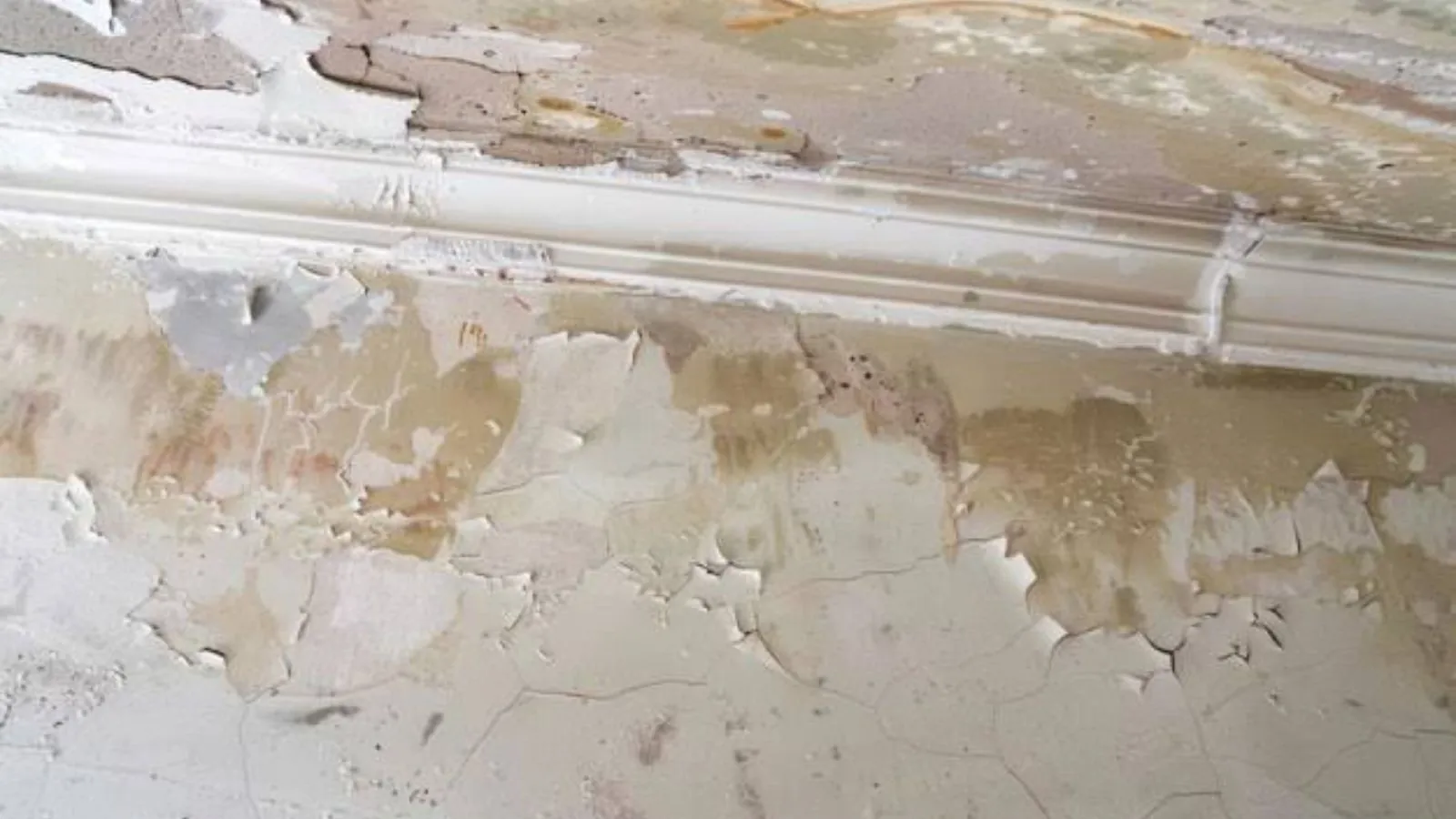
Wall and drywall water damage in Saint James, NY is moisture that has wicked into gypsum board, plaster, baseboards or the insulation behind them, leaving stains, bubbling paint, soft spots or a musty smell. The surface is only the visible part. Gypsum board drinks water like a wick, so damage often reaches well past the stain.
This page covers how walls are mapped, when drywall can be dried and when it is cut out. Stains that start overhead are covered on the ceiling water damage page.
Why water travels inside a wall
A wall is a hollow box. Gypsum board has a paper face and a chalky core that pulls water upward the way a paper towel does, so a puddle at the baseboard can climb the board well above the visible wet line. Inside the cavity, water also runs down studs and settles on the bottom plate.
That is why the stain on the surface rarely matches the wet zone. Supply lines, drain stacks and window leaks all drip into the cavity, and the insulation holds the water against the board. The problem keeps going after the source is stopped unless the cavity is opened or dried. If you live in older construction such as the historic Saint James core, ask for a moisture assessment before any wall is opened.
What the stains, bubbles and soft spots are telling you
Press the wall with a flat hand, then check the baseboard and the corner where the wall meets the floor. Drywall that is cool, soft or slightly spongy is wet. A stain that is dry and crisp may be old water, but a meter will confirm whether anything is still active.
- Paint bubbling or blistering, where water sits behind the paint film
- Brown rings or tide lines, often from water that dried and returned several times
- Baseboards that have swollen, separated or pulled from the wall
- Drywall seams that have cracked, ridged or opened up
- A musty smell near the wall with no obvious stain
How walls are mapped and dried
Moisture mapping starts with a pinless moisture meter run across the wall in a grid, and a pin meter to check the reading at the stud and the bottom plate. A thermal imaging camera shows cool, wet zones behind the paint. The crew marks the wet line on the wall and records readings so each day is compared with the last.
To dry a wall that can be saved, baseboards are removed and small holes are drilled or cut at the bottom so air can enter the cavity. Air movers and an injectable drying system push dry air behind the board while LGR dehumidifiers remove the moisture from the room. The wider process is described on the structural drying page.
Dry it or cut it out? Wall symptoms compared
The same-looking stain can have very different causes, so the repair depends on what the meter finds behind it.
| Wall symptom | Likely cause | Repair |
|---|---|---|
| Paint bubbling or blistering | Water behind the paint film from a leak or a long period of humidity | Find the source, dry the board, then scrape, prime and repaint |
| Brown ring or tide line | A leak that wets and dries repeatedly, often from a pipe, window or roof | If readings are dry, seal the stain and repaint, and if wet, open the wall |
| Soft or crumbling drywall | The gypsum core is saturated and has lost its strength | Cut out and replace the section |
| Swollen or stained baseboard | Water wicking up from the floor or splashing from a failed line | Remove, dry the cavity behind it, replace the trim if swollen |
| Sagging or wavy drywall | Board is fully wet, often with wet insulation behind it | Remove the board and insulation, dry the framing, then rebuild |
| Musty smell with no visible damage | Moisture trapped in the cavity or the insulation | Make a small inspection opening, take readings, then decide |
Flood cuts, insulation and baseboards
A flood cut is a straight horizontal cut made in the drywall above the highest wet reading, which removes the wet section and exposes the cavity. It is used when water has reached the wall from the floor or when the board is sagging, and the cut line sits above the point where meters turn dry.
Fiberglass batts that stayed wet are usually removed, since they flatten and hold water against the studs. Spray foam sheds water better and can often stay. Wet baseboards come off first because they hide the bottom edge, where moisture lingers longest. If the water source ran along the ground, the basement water damage page covers what happens below.
Plaster walls in older homes
Saint James has older homes, and some of them have plaster over wood or metal lath instead of drywall. Plaster is thicker and heavier, takes longer to dry and behaves differently under water. Ask the crew to identify which material you have before anything is cut.
Plaster that is still tight to the lath can often be dried in place with air movers and dehumidifiers. Plaster that has separated from the lath, sags, or crumbles under a gentle press has to come off. Patching a plaster wall with drywall is common, and a smooth finish is built up in coats.
What to do when a wall is wet right now
A leak inside a wall can be hard to stop and hard to see, so move through these in order.
- Shut off the main water valve if you cannot tell which line is leaking.
- Turn off the breaker for any circuit that serves outlets or switches on the wet wall.
- Take pictures, then move furniture and wall hangings off the wall.
- Do not poke holes in the wall to drain it, since that can spread water and damage wiring.
- Run a fan or open a window if the weather allows, and leave the rest for meter readings.
Ask which standard the crew works to
The ANSI/IICRC S500 standard guides how wet walls are assessed, opened and dried, and it is a useful yardstick when comparing scopes. Ask any company whether it measures moisture inside the wall cavity before deciding what to cut, and whether those readings will be shared with you.
What affects the cost of wall and drywall water damage repair
The wall that looks small on the surface may need a lot of work behind it, and these factors set the scope.
- Water category, since clean water allows more drying and contaminated water means removal
- Affected area, including how far above the stain the board is wet
- Materials, such as drywall, plaster, insulation type and trim
- Drying days and equipment, including air movers and dehumidifiers
- Rebuild scope, covering board, taping, texture, primer, paint and baseboard
Insurance and getting a real number
Policies usually treat sudden, accidental losses differently from gradual ones, so ask your insurer which category your loss falls into.
Call (934) 223-1875 to describe the wall, and the scope and price are explained before work starts. Crews serve Saint James and nearby towns, including Smithtown.
Frequently asked questions
Can wet drywall be dried instead of replaced?
Yes, when the water was clean, the board is still firm and the paper face is intact. Moisture readings at the board and the studs show whether the cavity has dried. Soft, crumbling or sagging board is replaced.
What is a flood cut?
It is a horizontal cut through drywall above the wet line. Removing the section below it exposes the cavity so the framing can be dried and the insulation inspected.
Why is my paint bubbling?
Bubbling usually means water or high humidity has gotten behind the paint film. The cause could be a leak, a wet wall cavity or condensation. A meter reading tells you whether the wall is still wet.
Does wet insulation have to come out?
Wet fiberglass batts usually do, because they stay damp and press against the framing. Foam insulation often dries in place. The decision follows meter readings and the water category.
Can a water-stained wall just be painted over?
Only after it tests dry. Painting over a wet or recently wet wall traps moisture and the stain tends to return. If you see musty smells or dark spots, read the mold remediation page before covering anything.
Does plaster get repaired differently?
Yes. Plaster that is still bonded to the lath can often be dried in place, while loose or crumbling plaster is removed and patched. Identifying the wall type comes before any cutting.