
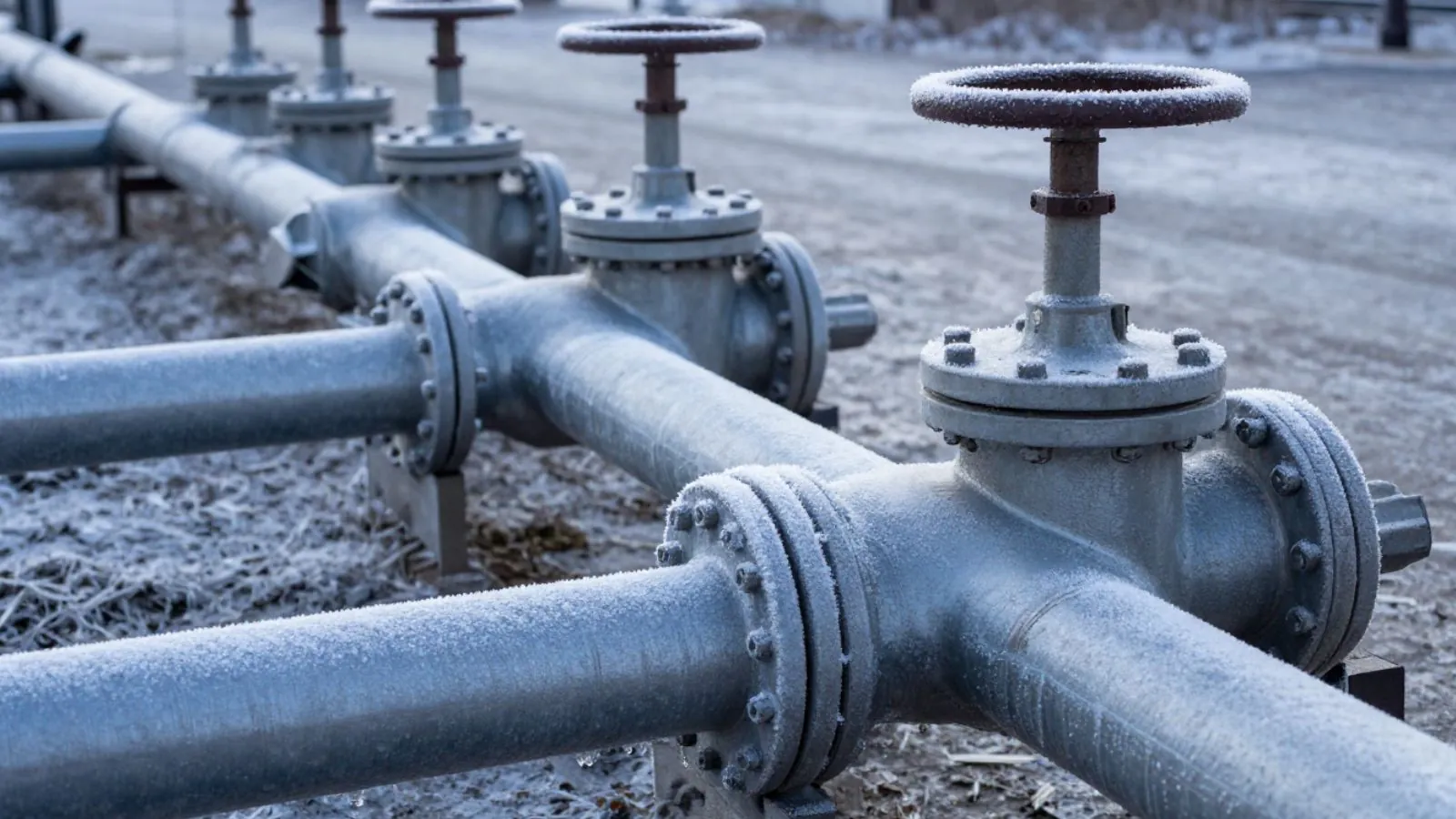
If a faucet gives you a trickle or nothing at all on a cold morning, open it and leave it open, then find your main shutoff before anything thaws. Our 24/7 line is there if you see water the moment the ice lets go. Frozen pipe water damage in Saint James, NY is the leak that follows when a pipe that froze and cracked starts carrying pressure again.
The ice itself rarely causes the flooding. The crack it leaves behind does, once warmer water pushes through it.
Why the damage appears after the thaw
Water expands as it turns to ice, and the squeezed section of pipe between the ice plug and a closed faucet takes the strain. The pipe often splits along a seam but stays sealed by the ice itself. When the plug melts, the crack opens and household pressure sends water into the wall, ceiling or floor, sometimes while no one is home. A split above a finished room shows up first as a stained or sagging ceiling.
We will not quote a local freeze count here, because we found no figure we can verify. The National Weather Service office in Upton publishes Islip climate almanacs that you can look at yourself, and the recent low temperatures there show whether last night was cold enough to worry about. Use that record to decide which pipes to inspect after a cold snap.
Signs a pipe is frozen or already split
Check the whole house, not only the room where you noticed the problem.
- A faucet that runs as a trickle, sputters, or gives no water at all
- Frost or a visible bulge on an exposed pipe
- A pipe that is cold to the touch while the matching pipe next to it is not
- Hissing, dripping or the sound of water in a wall after temperatures rise
- A new stain, soft spot or paint bubble on an exterior wall or below a bathroom
- A water meter that moves when every fixture is off
Thawing a pipe without starting a second emergency
Never use an open flame. A propane torch or a lighter can ignite framing and insulation inside the wall, and it can also overheat a joint and pop it open. Warm the pipe gradually with a hair dryer, a heating pad, or towels soaked in hot water, working from the faucet back toward the frozen spot.
Keep the faucet open the whole time so melting water has somewhere to go and pressure cannot build behind the ice. If you cannot reach the frozen section, if the pipe is bulged, or if water appears at any point, close the main valve and call a licensed plumber. A space heater near a pipe is fine only when it stays supervised and well away from anything that burns.
Never use fire on a pipe
Torches, kerosene heaters and lighters turn a frozen pipe into a fire risk inside a wall. Use warm air and warm towels only, and stop if you smell anything scorching.
Where pipes freeze and what to check there
Pipes freeze where cold air reaches them and warm air does not. The table below lists the usual places and the clue to look for at each.
| Pipe location | What to check | Why it matters |
|---|---|---|
| Exterior walls behind kitchen and bath sinks | Open the cabinet door, feel the pipes, and look at the wall bottom for stains | Cold air reaches pipes that sit against the outside sheathing |
| Garage and unheated rooms | Supply lines to a water heater, washer or utility sink, and any sprinkler feed | No heat source, and a split can leak unnoticed for days |
| Hose bibs and outdoor spigots | Look for a drip, then check the pipe stub from inside, usually in a basement ceiling | The pipe behind the spigot can crack even when the faucet looks fine |
| Crawl space and basement rim joist | Check lines along the foundation wall and near vents or gaps | Cold air blows across pipes where the house meets the foundation |
| Attic and upper-floor walls | Look for stains on the ceiling below and inside closets on outside walls | A split drops water through insulation to the floors beneath |
How water travels through interior drywall
Drywall acts like a wick. Water that starts at the bottom of a wall climbs upward by capillary action, so a stain at knee height can mean the board is wet a foot above it. Insulation holds moisture against the sheathing and framing, and the paper facing keeps it from drying out on its own.
That is why a moisture meter reading matters more than how the wall looks. Crews scan with pinless meters and a thermal imaging camera, cut small openings where readings stay high, then dry the cavity with air movers and LGR dehumidifiers. Extra drying equipment is discussed on the structural drying page, and wet crawl space framing is addressed on the crawl space page.
Options and trade-offs after a freeze
A thawed pipe that holds pressure may be left alone, but an unexamined crack can fail later. Replacing the cracked section is cheaper than another flood, and moving a vulnerable line off an outside wall costs more up front but removes the weak spot. Pipe insulation, sealing gaps and keeping a faucet dripping on very cold nights reduce risk without making it zero.
If the pipe has already burst, the shutoff and drain steps are covered on the burst pipe page. For water already on the floor, extraction is the first step.
Ask which standard the crew works to
Published guidance such as ANSI/IICRC S500 describes how water damage should be assessed and dried, including how to handle materials soaked by a thawed pipe. Ask any company which standard its crews follow and how drying progress will be recorded, so you can see the readings and not just the invoice.
What drives the cost of freeze damage
A frozen line can mean anything from a quick thaw to a flooded floor, so the scope is set by these factors.
- Water category, which is usually clean supply water unless it has sat or touched other materials
- Affected area, from a single wall bay to rooms on more than one level
- Materials, including insulation, drywall, flooring and cabinetry
- Drying days and equipment, which grow with the amount of wet framing
- Rebuild scope, covering drywall, paint and any pipe rerouting
A frozen pipe is thawing right now, do this first
The moment ice melts is the moment to watch. Stand near the main valve and act in this order.
- Locate the main shutoff and confirm it turns before you start warming anything.
- Open the faucet on the affected line so melting ice can drain out.
- Watch the wall, ceiling and floor around the pipe for drips, stains or the sound of spraying.
- If water appears, close the main, drain the lines at the lowest faucet and switch off the water heater.
- Move furniture and valuables away from the wet area and photograph everything.
- Call the 24/7 line if water is in the structure, even if the flow has stopped.
Insurance and getting a real number
Sudden and accidental water damage is often covered, while gradual leaks and neglect often are not, so check your policy and ask your insurer how it treats freeze losses. Photos taken before any cleanup help.
To find out what a specific split involves, call and describe the pipe and where the water went. Scope and price are explained before work starts, and the same crews cover Lake Grove and surrounding towns.
Frequently asked questions
Do you handle frozen pipe emergencies at night or on weekends in Saint James?
Yes. Dispatch is open 24/7, including nights, weekends and holidays, and same-day response is offered when available. No arrival time is promised, so open the faucet, find the main shutoff and watch the wall while you wait.
Is it safe to thaw a frozen pipe myself?
It can be, if you use gentle heat such as a hair dryer or warm towels and keep the faucet open. Never use an open flame. If you cannot find the frozen section or water appears, close the main valve and call a plumber.
How do I know whether the pipe split?
Look for stains, soft drywall, dripping or hissing after temperatures rise, and watch the water meter with all fixtures off. A split can be invisible behind a wall, so a moisture meter or thermal camera gives a better answer than your eyes.
How many freezing nights does it take for pipes to freeze here?
We do not quote a local number, because we found no verified freeze count for Saint James. The National Weather Service Upton office publishes Islip climate almanacs you can read for recent temperatures. Pipes on exterior walls and in unheated spaces are always the first to check.
Do pipes burst when they freeze or when they thaw?
The crack forms while the water is freezing. The leak usually starts when the ice melts and pressure reaches the split, which is why damage often shows up after the weather warms.
Will insurance cover a frozen pipe?
Sudden and accidental losses are often covered, while damage from neglect often is not. Read your policy, ask your insurer how it handles freezing, and document the damage before cleanup.