
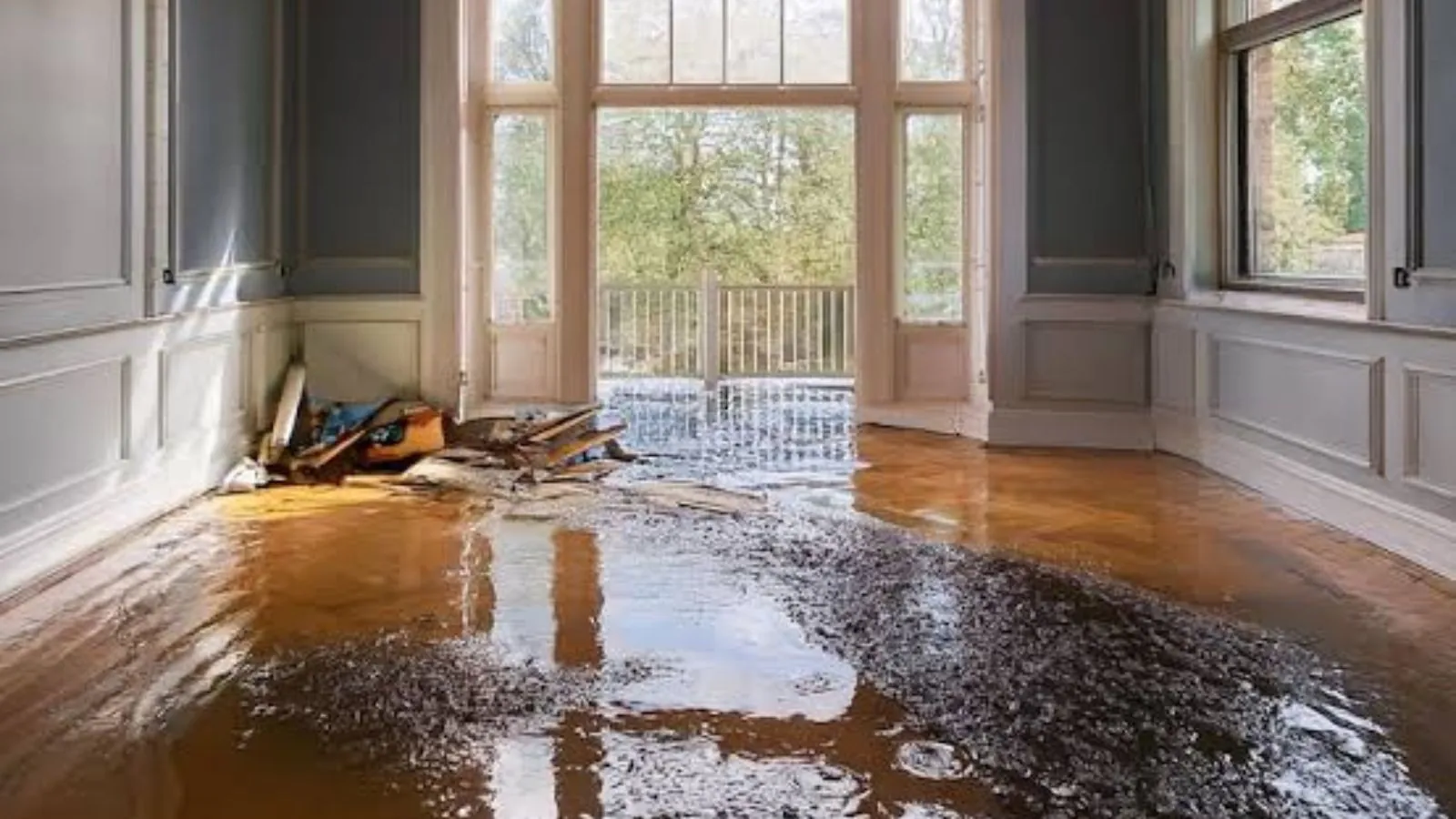
Water that rises into your home from the ground, a river or the street should be treated as contaminated until proven otherwise. Keep everyone out of the wet rooms and use our 24/7 dispatch line when it is safe to describe what you see.
Flood damage cleanup in Saint James, NY is the removal, disinfection and drying of a structure after Category 2 or Category 3 water, meaning water that carries soil, sewage or other contaminants. The sooner it leaves, the less of the structure it ruins.
Why mapped flood zones do not tell the whole story here
The Suffolk County Hazard Mitigation Plan places the Town of Smithtown's FEMA flood zones near the Nissequogue River and other water bodies. The same plan says groundwater flooding is a major concern and that FEMA flood maps do not capture it. A home outside a mapped zone can still take in water, especially in a basement, through slab cracks, window wells and the floor-to-wall joint after heavy rain.
The plan also counted 220 National Flood Insurance Program policies and 20 repetitive-loss properties in the Town as of July 2020. That tells you flood claims happen here more than once to the same buildings. Do not assume your address is safe because the map is blank, and ask your insurer what your policy does with groundwater.
Signs flood water is getting into the house
Floodwater does not always arrive as a wave. It often creeps in at the lowest point and goes unnoticed until the carpet is soaked.
- Water seeping at the base of basement walls or bubbling up through floor cracks
- A sump pump that runs without stopping, or one that has failed
- Muddy, cloudy or discolored water with a silt line on the wall
- Water coming under exterior doors, through window wells or from a flooded yard
- A sour or earthy odor that arrives with the water
- Drains and toilets that slow down while the ground outside is saturated
How crews clean up and dry a flooded structure
The first steps are safety steps. The crew wears boots, waterproof gloves and respirators, confirms the power situation and then removes standing water with submersible pumps and truck-mount extraction units. From there the work is mostly about what must leave the house.
Porous materials that were soaked by Category 3 water generally come out, including carpet, padding, insulation and the lower part of drywall. Hard surfaces and framing are cleaned and treated with an antimicrobial, then dried with air movers and LGR dehumidifiers while moisture meters and a thermal imaging camera confirm progress. ANSI/IICRC S500 is the published standard for water categories and drying, so ask any company whether its crews work to it.
Heating and cooling equipment needs separate attention. National Grid's Long Island storm guidance says flood-damaged heating and cooling equipment in most cases has to be replaced, not repaired, and that water heaters exposed to floodwater should be replaced. It also says not to turn off the gas meter.
Water category, source and what is done
The category sets the whole plan, so it is worth learning which one you are dealing with.
| Water category | Typical source | What is done |
|---|---|---|
| Category 1, clean | A broken supply line or rainwater that has not touched soil or drains | Extract, dry in place when materials allow, monitor with moisture meters |
| Category 2, significant contamination | Groundwater seepage, a washing machine or dishwasher overflow, a sump failure | Extract, remove padding and wet insulation, clean and treat surfaces, then dry |
| Category 3, grossly contaminated | River or tidal overflow, surface runoff carrying soil, sewage backup | Remove porous materials, clean and disinfect, filter the air and dry the structure |
Categories can worsen
Clean water that sits on carpet and soaked materials for long enough can slide into a higher category, which is why pulling it out early changes what has to be thrown away.
Options, trade-offs and related problems
Salvaging is a trade-off. Solid hardwood and concrete often survive a flood after cleaning and drying, while carpet, padding and drywall below the water line usually do not. Pressing ahead with rebuilding before readings come back dry is the usual mistake, because sealed wet framing can grow mold.
If the water arrived below grade, that room needs its own plan for walls, slab and stored items. If the dark water came up through a drain, the sewage backup page has the safety steps. Bulk water removal is described under water extraction, and the drying that follows is explained on the structural drying page.
What drives the cost of flood cleanup
Flood jobs run larger and take more steps than a clean-water leak. These are the factors that decide it.
- Water category, since Category 3 water means more removal, cleaning and disposal
- Affected area, including how far the water spread and how high it rose
- Materials, such as how much carpet, padding, insulation and drywall must be replaced
- Drying days and equipment, which grow when the structure is saturated
- Rebuild scope, from flooring and drywall to cabinets and mechanical equipment
Flood water is rising right now, protect yourself first
Your safety matters more than anything in the room. Work through these steps only for as long as the area stays safe.
- Move people and pets to the highest dry level, and stay out of any room where water has reached outlets.
- Text SuffolkAlerts to 67283 to receive county alerts, and follow local instructions.
- Avoid drinking tap water until you are sure it is not contaminated, as the Suffolk County Office of Emergency Management advises after storms.
- Photograph the water line, damaged belongings and the outside of the house before touching anything.
- Carry irreplaceable papers and medications to higher ground.
- Call the 24/7 line once you are safe, and describe the depth and where the water entered.
Power and flood water
PSEG Long Island says flood water can affect your meter, panel and wiring. If you cannot reach the breaker dry, call PSEG Long Island at 1-800-490-0075 to shut power off at the meter, and have a licensed electrician inspect before reconnection.
Flood insurance is separate and has a waiting period
The New York Department of Financial Services says flood losses are generally not provided under standard homeowners or tenants policies. FEMA says a new flood policy typically has a 30-day waiting period before it takes effect, so a policy bought as a storm approaches usually will not help. The state also advises you to file claims as soon as possible and document your losses before cleaning anything up.
If you have flood coverage, tell your insurer right away. To see what your own situation involves, call the 24/7 line for a real number, and scope and price will be explained before work starts. Crews also serve Smithtown, where the Nissequogue River corridor sits.
Frequently asked questions
Do you handle flood emergencies at night or on weekends in Saint James?
Yes. The dispatch line is open 24/7, including nights, weekends and holidays, and same-day response is offered when available. No arrival time is promised, so get people to dry ground, stay away from electrical items and take photos while you wait.
Is flood water dangerous to touch?
Treat it as contaminated. Flood water can carry soil, sewage and chemicals, so wear rubber boots and waterproof gloves, wash well afterward and keep children and pets out.
Does homeowners insurance cover flooding?
The New York Department of Financial Services says flood losses are generally not provided in standard homeowners or tenants policies. Check your policy, and ask your insurer about separate flood coverage.
Can I buy flood insurance after the water is already rising?
FEMA says a new flood policy typically has a 30-day waiting period, so coverage bought at the last moment usually will not apply to that storm. Ask your agent about the timing before any storm season.
Does a house outside the FEMA flood zone still need flood cleanup?
It can. The Suffolk County plan says groundwater flooding is a major concern in the Town and that FEMA maps do not capture it. Water can enter outside a mapped zone.
What will be thrown out after a flood?
Usually carpet, padding, insulation and drywall that Category 3 water soaked. Hard surfaces and framing are often cleaned, treated and dried, with moisture meter readings deciding what can stay.