
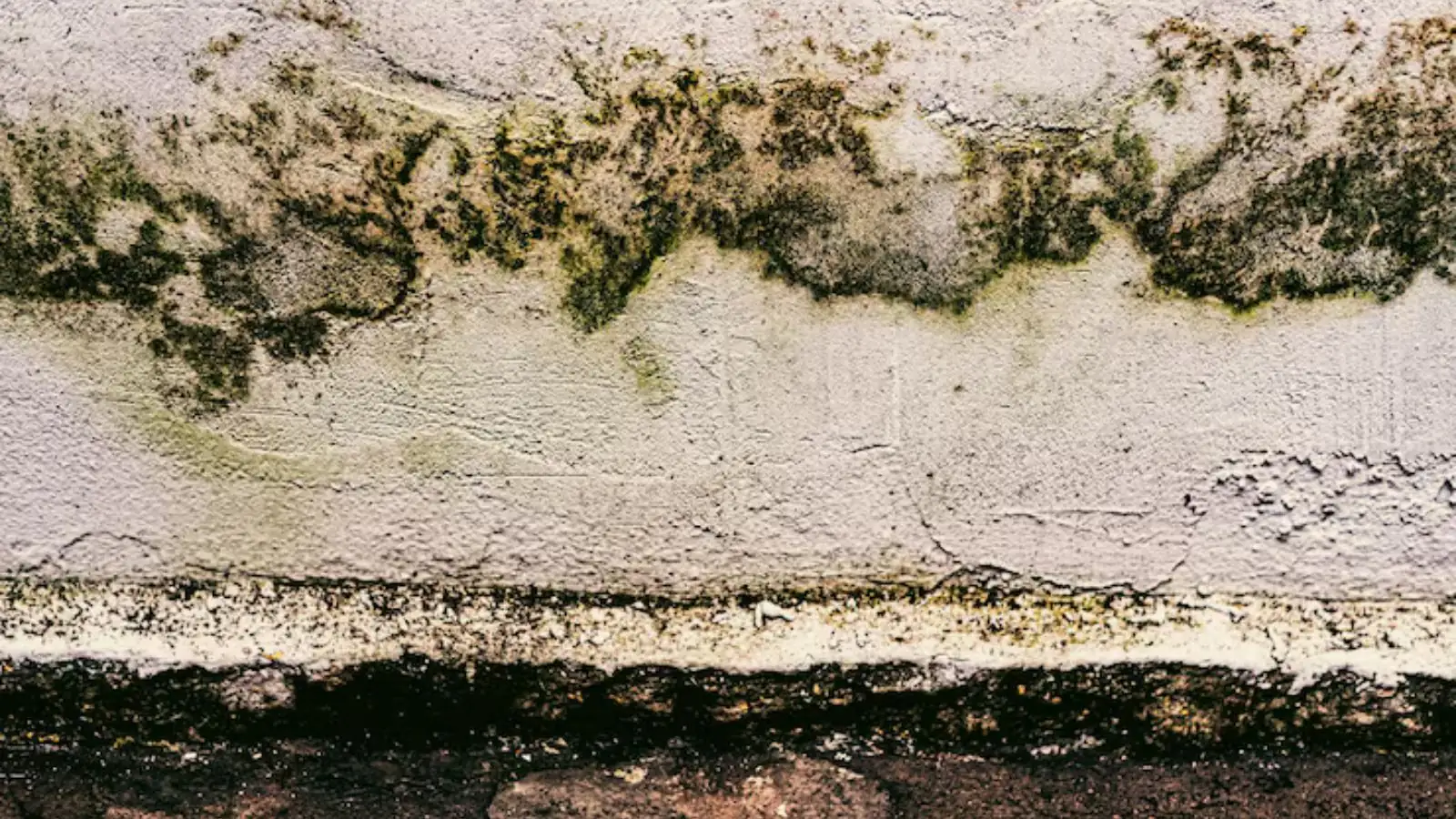
Mold remediation in Saint James, NY is the controlled removal or cleaning of mold-affected materials after the moisture that fed the growth has been found and fixed. It is a different job from drying a wet house, and in New York it is regulated work. Cleaning alone does not finish it.
This page explains the steps, the 10 square foot line in state law and how clearance testing works. If the cause was a recent leak, structural drying is the part that removes the moisture.
There are dark spots on the wall or ceiling and a musty smell
Dark spotting on drywall, a fuzzy patch behind a vanity or a damp smell in a closet are the signs most people notice first. Dark marks are not always mold, and a smell alone does not prove it. What the pattern does tell you is that a material has been wet, and that is the part to investigate.
Mold remediation is the trade term for removing affected material under containment, following a written plan. The plan starts with the moisture source, because a surface cleaned while the wall stays damp is back in the same conditions the next week.
Mold needs moisture, so the leak comes first
Mold needs moisture, organic material to feed on and time. Drywall paper, wood framing, insulation facing and carpet pad supply the material, and a leak supplies the water. Remove the moisture and you remove the condition that lets growth continue.
The leaks that lead here are usually ordinary. A toilet supply line or wax ring that weeps into the subfloor, a sink drain that drips into the cabinet and a clogged AC condensate line that overflows into the ceiling below are common examples. A roof leak or failed flashing soaks the attic and the ceiling, and siding or a window that lets in wind-driven rain wets the wall cavity from outside.
- Sink and cabinet leaks are covered under kitchen water damage
- Air handler and condensate overflows are covered under AC leak water damage
- Roof leaks and the ceilings below them are covered under ceiling water damage repair
What New York law says about mold work
New York regulates this trade under Labor Law Article 32 and the NYS Department of Labor. Mold assessors and mold remediation contractors must be licensed. Under Labor Law 936, a licensee may not perform both mold assessment and mold remediation on the same property.
The law applies to projects greater than 10 square feet. Under 10 square feet, an owner may clean it themselves if they are not mold sensitive, and owners working on their own home are exempt. The mere presence of mold does not require assessment or remediation.
Ask any company to show its NYS mold license before work begins, and check that it matches the service being offered. The network's role is to dispatch a licensed and insured restoration professional, and you should ask whether the company doing the remediation is separate from the one doing the assessment.
Signs that point to mold after a leak
Seeing a mark and confirming mold are two different steps. Soot, dirt, mineral deposits and old water stains can all look like mold from across a room. A moisture meter and a licensed assessor give a clearer answer than a guess.
- Visible dark, green, gray or white fuzzy patches on drywall, trim, caulk or ceiling tile
- A musty smell that is strongest near a wall, closet or cabinet that was once wet
- Paint bubbling, wallpaper peeling or a stain that keeps returning after repainting
- Condensation on windows or vents in a room with a known leak
- A leak that stayed wet for days before anyone found it
How mold remediation is done under ANSI/IICRC S520
ANSI/IICRC S520 is the published industry standard for mold remediation. Ask any company whether its crews work to it and what that looks like on your job. A good answer describes containment, air handling, material removal and verification in plain terms.
In outline, the work follows this order.
- Fix the water source and dry the structure, with moisture meters and a thermal imaging camera confirming where it is wet.
- Build containment with polyethylene sheeting, a zippered entry and a small decontamination area so spores do not travel into clean rooms.
- Run negative air, meaning HEPA air filtration machines that exhaust outdoors and keep the work area at lower pressure than the rest of the house. A manometer shows whether that pressure holds.
- Remove porous materials that have mold growth, such as drywall, insulation, carpet, pad and ceiling tile, and seal them in polyethylene bags before they leave the containment.
- Clean framing and other non-porous surfaces that can be saved using HEPA vacuums, damp wiping and, where the plan calls for it, abrasive cleaning of the wood.
- Finish with a HEPA vacuum and damp wipe, allow the containment to settle, take it down and confirm dry readings before any rebuilding starts.
Which path fits, by area size
The 10 square foot line in New York law is the only fixed threshold here, and this table does not add any others. How the work is handled beyond that depends on the plan, the materials and the moisture source.
| Area size | Typical path | Who is involved |
|---|---|---|
| Under 10 square feet | An owner may clean it if not mold sensitive, after the moisture is fixed and the material has dried. The mere presence of mold does not require assessment or remediation | The owner, or a restoration professional if you prefer help |
| Greater than 10 square feet, hired work | State mold law applies. A written assessment sets the plan, remediation follows, and verification closes the job | A licensed mold assessor and a separate licensed mold remediation contractor |
| Greater than 10 square feet, owner working on their own home | Owners are exempt from the licensing rules, but containment, dust control and moisture control still matter | The owner, who may still hire out part of the work |
| Any size, no visible mold but a known leak or a musty smell | Find the moisture with meters and thermal imaging, open a small inspection point, then decide | A restoration professional, and an assessor if mold is found |
Independent clearance testing, explained
Clearance testing, also called post-remediation verification, checks that the remediation is complete. A licensed assessor inspects the area visually, may collect air or surface samples and reviews the moisture readings against the plan. The report says whether the work met the criteria written in that plan.
Because Labor Law 936 bars one licensee from doing both jobs on the same property, the person grading the work is not the person who did it. That separation is the reason to call it independent. Ask the assessor what the pass criteria are before remediation starts, and ask for a written report.
Mold clearance when selling or financing a home
Buyers, lenders and appraisers sometimes ask for documentation after a mold or water problem. Lenders have their own rules, and no one at this network or on this page can promise what a lender, buyer or insurer will accept. What you can do is keep the paperwork.
A useful file holds the assessor's written plan, the remediation contractor's invoice and scope, the clearance report and the moisture readings that show the structure dried. New York's Property Condition Disclosure statute, Real Property Law 462, asks about rot or water damage (item 28) and water penetration or seepage (item 39), so ask your real estate attorney how to answer.
Safe steps before anyone arrives
The aim is to keep the problem from spreading to rooms that are clean.
- Stop the water source, whether that means a supply valve, an AC unit or a roof leak, and dry what you can with fans pointed at the surface.
- Do not scrub, sand, brush or blow air across suspect areas, because that moves spores into the rest of the house.
- Close the door to the room and turn off any fan or vent that moves air out of it.
- Photograph the area and write down when the leak started.
- Take health questions to a physician. Mold work addresses the building, not your symptoms.
Safety checks before any mold work
These steps avoid spreading spores while you decide on next steps.
- Do not disturb visible growth by sweeping, scrubbing or running a fan across it
- Keep children and anyone with breathing concerns out of the affected room
- Never mix bleach with ammonia or other cleaners
- Turn off the HVAC fan if it would push air across the affected area
- Photograph the area and note when you first saw it
When to call 911 instead
Call 911 for chest pain, trouble breathing or anyone who collapses. Mold questions can wait, an emergency cannot.
What affects the cost of mold remediation
Two houses with the same stain can need very different work, and these factors explain why.
- Water category and whether the moisture source has been fixed
- Affected area and how far growth extends behind finished surfaces
- Materials, because porous items are removed while framing can usually be cleaned
- Drying days and equipment, plus the days that containment and negative air stay in place
- Rebuild scope, covering new drywall, insulation, paint, flooring and trim
Insurance and getting a real number
Policies often treat mold differently from the water event that caused it, so check your policy or ask your insurer before work starts. Assessment and clearance testing are usually separate from the remediation scope, because a different licensed company does them.
Call (934) 223-1875 to describe what you found, and the scope and price are explained before work starts. We serve Saint James and nearby towns, including Smithtown.
Frequently asked questions
Why does my wall have dark spots and a musty smell?
Both point to a material that has been wet, though the marks could also be soot, dirt or an old stain. A moisture meter shows whether the wall is still damp, and a licensed assessor can say whether the spots are mold. Start by finding the leak.
Do I need a license to remove mold in New York?
Mold assessors and mold remediation contractors must be licensed, and the law applies to projects greater than 10 square feet. Owners working on their own home are exempt. Ask any company to show its NYS mold license.
Can the same company test for mold and remove it?
Not on the same property. Labor Law 936 says a licensee may not perform both mold assessment and mold remediation there. Ask whether the company doing remediation is separate from the one doing assessment.
How much mold can I clean myself?
Under 10 square feet, an owner may clean it if not mold sensitive. The mere presence of mold does not require assessment or remediation. Fix the moisture first, and ask a physician about your own situation.
What does clearance testing involve?
A licensed assessor inspects the area, may take air or surface samples and compares the results with the criteria in the written plan. It is done by someone other than the remediation contractor so the work is graded independently.
Will a lender or buyer accept my clearance report?
Lenders have their own rules, and nobody here can promise what one will accept. Keep the assessor's plan, the remediation scope, the clearance report and the drying logs, then ask the lender or your attorney what is required.
Does insurance cover mold remediation?
Coverage depends on the cause and your policy, and mold is often handled differently from the water loss behind it. Document the damage and ask your insurer what applies.