
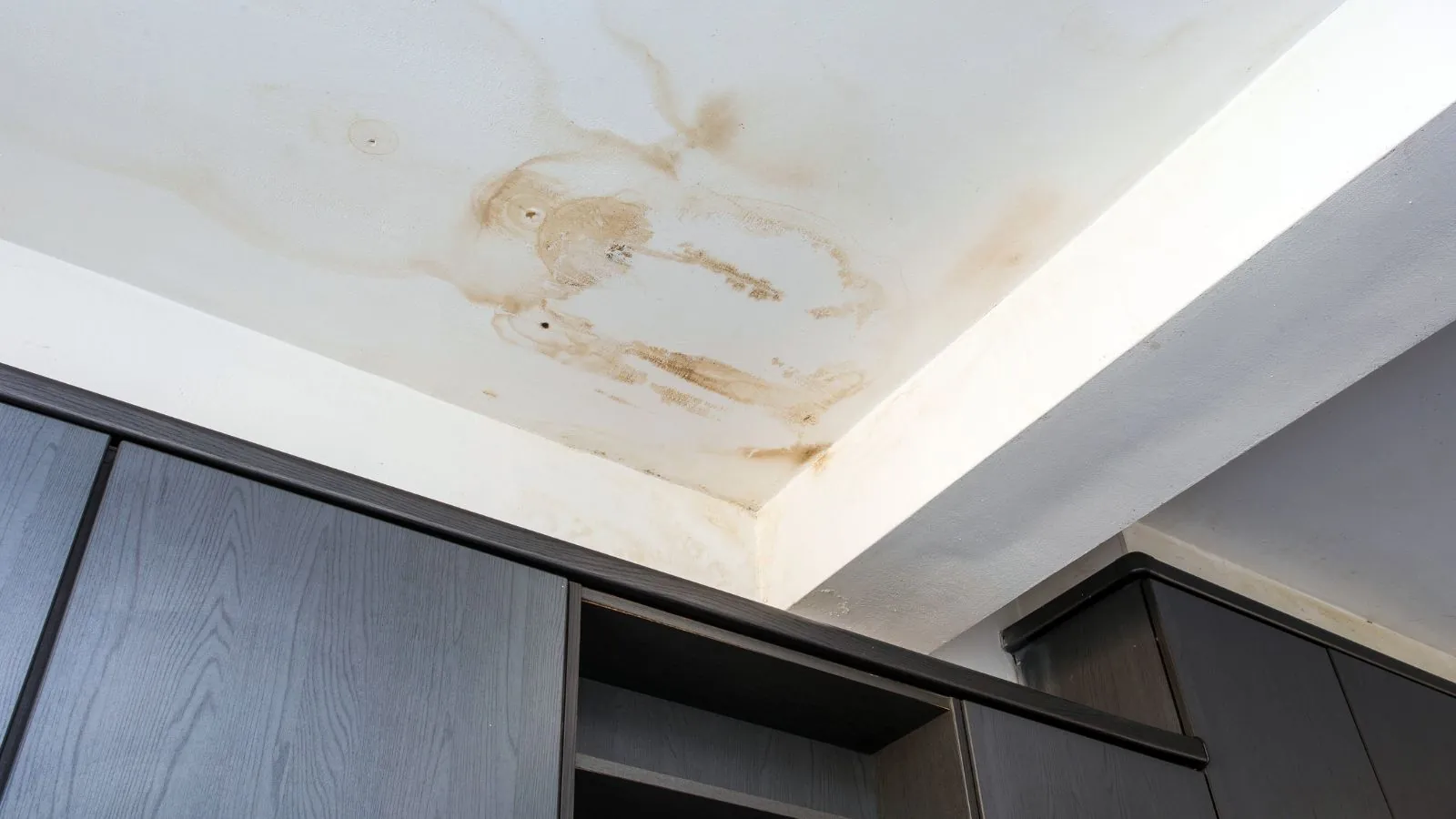
A ceiling that is stained, bowing or dripping needs attention today, and our 24/7 dispatch line is open while you work through the first steps. Until a crew arrives, move furniture out from under the spot, set a bucket under any drip and stay out of the room if the plaster is sagging.
Ceiling water damage repair in Saint James, NY means drying the wet drywall or plaster, the insulation and the framing above it, then rebuilding whatever cannot be saved. It applies to every source, from a roof to an upstairs bathroom, a supply line or an attic air handler.
Where the water above your ceiling comes from
Water rarely drops straight down from its source. It runs along the top of the drywall, follows a joist or a pipe for several feet, and soaks through at the lowest or weakest point. That is why a stain on a bedroom ceiling can sit six feet from the failed shower pan or lifted shingle that caused it.
After Hurricane Sandy in 2012, the Suffolk County Hazard Mitigation Plan says wind damage to trees and structures in the Town of Smithtown was greater than flood damage. For a homeowner here, that makes a storm-opened roof a realistic cause of a ceiling leak, not only a plumbing failure upstairs. After any high-wind night, check the ceilings under the roofline before you blame a pipe, and read about storm water damage cleanup if shingles or flashing are missing.
The usual sources are a roof leak through decking and insulation, a failed tub seal or toilet flange in an upstairs bathroom, a pinhole in a supply line inside the joist bay, and an attic air handler with an overflowing drain pan. Each leaves different clues, but the ceiling itself needs the same drying and rebuilding in every case.
What a stained, sagging or bulging ceiling is telling you
Color and shape give real clues. Clean water from a supply line leaves a pale tan stain with soft edges, while roof water picks up dirt and tannins from the insulation and dries into darker brown rings. A ceiling with a visible belly is holding water by the gallon, and the drywall paper has already lost most of its strength.
Use the table as a first guess only. A moisture meter and a thermal imaging camera confirm what is actually wet, because a ceiling can look dry on the surface while the insulation above it is soaked.
| Stain or sign | Likely source | Urgency |
|---|---|---|
| Pale tan ring with soft edges, shows up after someone showers | Upstairs tub seal, toilet flange or drain | High, every shower wets the framing again |
| Dark brown rings with ragged edges, worse after rain | Roof leak through decking and insulation | High if it drips, a roofer needs to tarp it |
| Stain near a ceiling vent or under the attic hatch | Attic air handler drain pan or condensate line | Moderate, stops once the unit is off |
| Spreading wet patch with no rain and no upstairs use | Pinhole in a supply line in the joist bay | Urgent, close the main shutoff |
| Bowed or sagging drywall or plaster | Pooled water held above the ceiling | Emergency, it can drop without warning |
| Dry brown ring that has not changed in weeks | An older leak that has stopped | Low, but still scan it with a moisture meter |
Roof water damage and roof leaks that show up as ceiling damage
Roof leak water damage usually begins small. Wind lifts or strips a shingle, or the flashing around a chimney or vent pipe pulls loose, and rain works through the underlayment into the plywood decking. The attic insulation then soaks it up like a sponge, and the water finally reaches the ceiling below. By the time you see a stain, the decking and insulation above it are often wet already.
Water damage from a leaking roof is two jobs for two trades. A roofer finds the opening and repairs the shingles, flashing or decking. Restoration crews dry and repair the ceiling, the insulation and the framing the water reached. We handle the second job only, so the roof itself belongs on a roofer's list.
Do both quickly. A tarp on the roof stops new water, and drying the attic and ceiling keeps the damp from turning into mold on the wood. Roof water damage is slow to dry in an attic because there is little airflow, so wet insulation is usually pulled out and bagged. Ask the roofer to photograph the opening, and keep those photos with your own.
How a wet ceiling is dried and rebuilt
A crew starts by mapping the damage with a moisture meter and a thermal imaging camera, which shows cool, wet areas from below and in the attic. Readings tell us how far to cut. Water is classified by category under ANSI/IICRC S500, the published standard for water damage, and you can ask any company whether its crews work to it.
Wet insulation comes out first. Drywall that is sagging, stained through or soft gets cut back to dry edges, usually in straight lines a foot past the last wet reading so the patch is clean. Sound plaster ceilings are often dried in place, and cut open only where the plaster has let go of the lath.
Air movers push dry air through the open joist bays while an LGR dehumidifier pulls moisture out of the room. Some jobs also use an injectable drying system that sends warm air into closed cavities through small holes. Our page on structural drying and dehumidification explains how crews confirm the framing is dry before it is closed up.
Rebuilding comes last. New drywall is hung, taped and sealed with a stain-blocking primer, and the whole ceiling is usually repainted so the patch does not telegraph. If your repair involves new wiring or plumbing, ask the Town of Smithtown Building Department whether a permit applies.
Cut it out or dry it in place, the honest trade-offs
Drying in place saves money and mess when the drywall is only damp, has not bowed and the water was clean. It does not work on a ceiling that has sagged, because the gypsum core has softened and the paper facing may be growing mold on the back side.
Full removal costs more up front, but it opens the cavity so the insulation and framing can be dried and inspected. It is the safer choice when roof water or bathroom drain water was involved, since that water carries dirt and bacteria. A partial cut works when only one joist bay is wet, though textured ceilings are hard to match and often need a full repaint.
If the ceiling has already come down, the job changes. Wet debris is bagged, hanging drywall is cleared, and the wall beneath is checked as well, which is covered in our guide to wall and drywall water damage repair.
Water is coming through the ceiling right now
Act in this order, and stop when something looks unsafe. Your priority is keeping people clear of the ceiling and keeping water away from electrical parts.
- If you suspect plumbing, close the main shutoff, or the fixture valve upstairs if you can reach it.
- If the water is coming from the roof, do not climb up in rain or wind. A roofer can tarp it.
- Move rugs, electronics and furniture out from under the wet area and set out buckets.
- If water is near a ceiling light, fan or outlet, switch that circuit off at the panel only if you can reach the panel standing on a dry floor.
- Stay out from under any bowed section. Water-heavy plaster and drywall can fall suddenly.
- Photograph the stain and the room before cleanup, since NY Department of Financial Services advises documenting your losses before cleaning anything up, then call the 24/7 line.
Never stand under a sagging ceiling
A bulge can hold dozens of gallons. If it is dripping steadily, leave a bucket in place and leave the room until a crew can release the water in a controlled way.
What drives the cost of ceiling water damage repair
No honest number exists until someone measures the damage. These are the factors that set the size of the job.
- Water category, since clean supply water is simpler than roof or drain water
- Affected area, including how many joist bays and how much attic insulation got wet
- Materials, such as drywall, plaster or a textured finish that is hard to match
- Drying days and equipment, including air movers and dehumidifiers
- Rebuild scope, from a patch and paint to a full ceiling replacement
Insurance and getting a real number
Sudden and accidental water damage is often covered, while gradual leaks and neglect often are not, so check your policy and ask your insurer how a roof opening or a plumbing failure is treated.
For a real number on your ceiling, call the 24/7 dispatch line and describe the stain, the room above it and when it started. Crews serve Saint James and nearby towns such as Smithtown.
Frequently asked questions
Do you handle ceiling water damage emergencies at night or on weekends in Saint James?
Yes. The dispatch line runs 24/7, including nights, weekends and holidays, and we send a licensed and insured crew with same-day response when available. We do not promise an arrival time, so use the wait to catch drips, move belongings and keep out from under any sag.
Will you fix the roof as well as the ceiling?
No. Restoration crews dry and repair the ceiling, insulation and framing, and a roofer repairs the roof. If a leak is still active, get the roof tarped first, then we dry what the water reached.
Should I poke a hole in a bulging ceiling?
Only when a crew is not coming soon and the ceiling is about to fail. Stand to the side with a bucket below, keep clear of light fixtures and wear eye protection. A trained crew can release the water more safely, so call first.
Can I just paint over a ceiling stain?
Painting hides the stain but not the moisture. If the drywall or insulation behind it is still wet, the stain returns and mold can grow on the back of the board. Have the area scanned with a moisture meter before any paint goes on.
How do I know whether the leak is the roof or a pipe?
Roof leaks usually get worse with rain and leave dark, ragged rings. Plumbing leaks follow water use and leave paler stains. If you are unsure, a thermal imaging camera and a moisture meter can trace the wet path back toward the source.
Does insurance cover a leaking ceiling?
It depends on the cause and your policy. Sudden and accidental damage is often covered, while slow leaks and neglect often are not, so ask your insurer. We cannot promise coverage or approve a claim.
Is it safe to stay in a room with a stained ceiling?
A flat stain with no bulge is usually safe to be near, but keep lights off if water is close to a fixture. A bowed, sagging or dripping ceiling is not safe to stand under. Leave the room and call.