
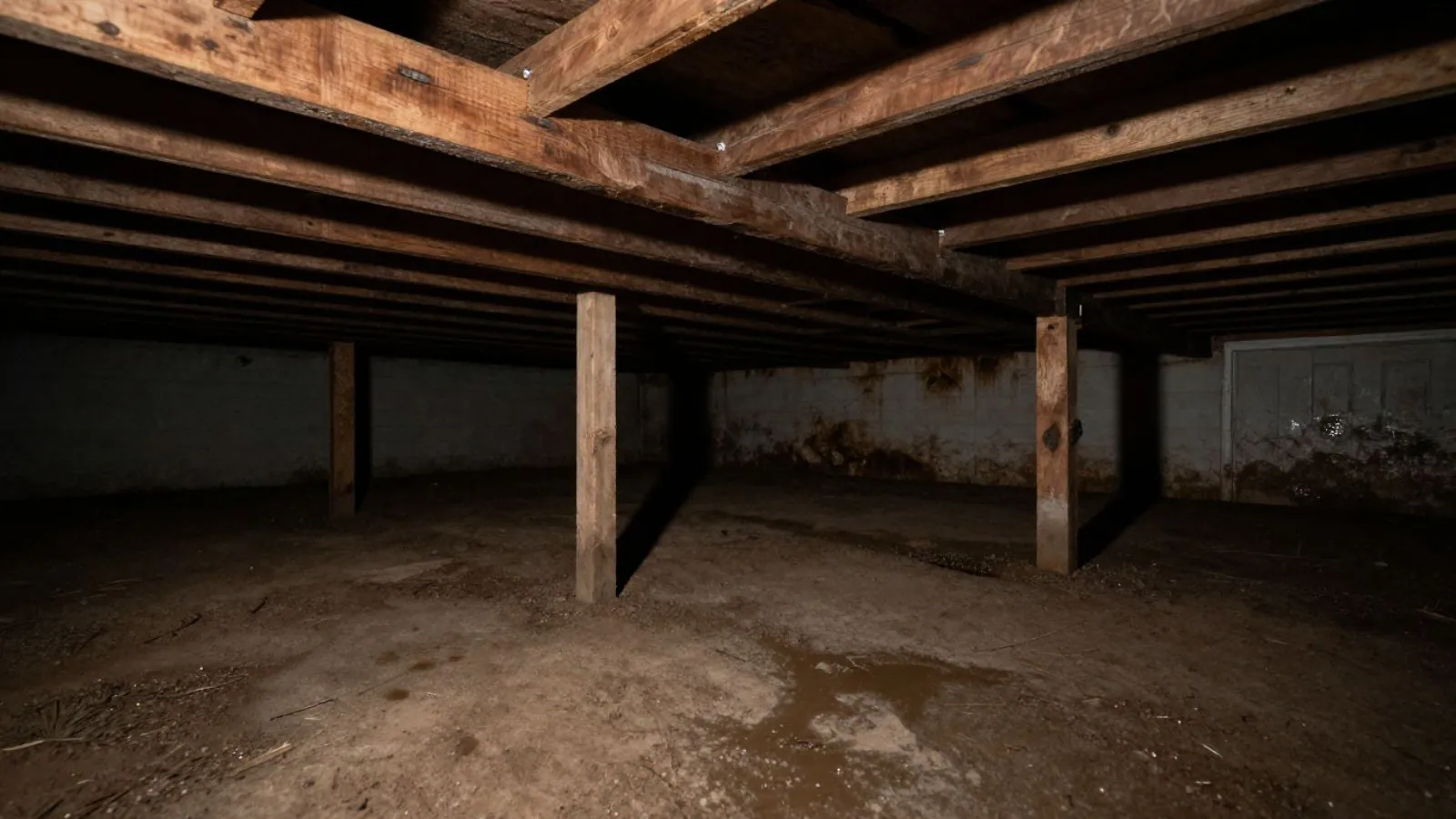
Crawl space water damage in Saint James, NY is moisture or standing water in the shallow void between the soil and your first floor, where it soaks joists, subfloor, insulation and the plastic vapor barrier. Nobody walks down there, so a slow drip or a rain-fed puddle can sit for weeks.
No public record tells us how many local homes have a crawl space, so this page is written for the homes that do. If yours has one and the air upstairs smells musty or a floor feels soft, start here.
Why the space under your floor fills with water here
Water reaches a crawl space three ways. Rain runs down the outside of the foundation and seeps through block or stone. Groundwater pushes up through the dirt floor when the water table climbs. And supply or drain lines running between the joists leak a little at a time, with no sound to warn you.
The local detail that matters is groundwater. The Suffolk County Hazard Mitigation Plan calls groundwater flooding a major concern in the Town of Smithtown and says FEMA flood maps do not capture it. So a crawl space that floods after a heavy rain may sit outside every mapped flood zone, and a clean result on a map lookup does not rule out a wet cause underneath you.
Watch the pattern before you call. Water that shows up only after storms points to the outside of the house. Water that appears in dry weeks points to a pipe. Surface water pouring in from the yard is a different job, covered under flood damage cleanup.
What you see under the house and what it means
Use this table as a first sort, not a diagnosis. Take photos of each sign before anything is moved or cleaned, because your insurer may ask to see them.
| What you see in the crawl space | What it usually means | What happens next |
|---|---|---|
| Puddles or standing water on the soil or liner | Groundwater or runoff came in, or a drain line failed | Water is pumped out with a submersible pump and the soil is left to dry |
| Sagging, damp fiberglass insulation between joists | The batts soaked up water or humid air and are holding it against the wood | Wet insulation is cut out and bagged, because it will not dry in place |
| Plastic vapor barrier torn, lifted or pooled with water | The ground cover no longer blocks vapor rising from the soil | The sheet is lifted, the soil dried, and the barrier re-laid or replaced |
| White fuzz or dark spots on joists or subfloor | Mold is growing on damp wood | Moisture readings are taken, then cleaning or a separate mold step is decided |
| Dark damp stains climbing the foundation wall | Seepage or wicking through the masonry | The entry point is traced before any drying equipment is set |
| Musty smell upstairs, cupped or soft flooring | Moisture is moving up into the subfloor | Readings are taken from above and below the floor |
How a wet crawl space is assessed and dried
A crew starts at the access hatch with a light and a moisture meter, then works along the joist bays looking for the entry point. Pin and pinless meters give readings on joists and subfloor. A thermal imaging camera shows cool, wet patches on the underside of the floor and behind hanging insulation.
Standing water comes out first with a submersible pump or a small extraction unit. Soaked insulation is cut away and bagged. Then air movers push air along the joist bays while an LGR dehumidifier pulls moisture out of the space, with ducting that carries wet air out through the hatch instead of up into the living area.
The drying itself follows the process explained on the structural drying page, with readings logged on every visit until the wood matches a dry reference. ANSI/IICRC S500 is the published standard for water damage work, so ask any company whether its crews follow it.
Before you climb down
Do not enter a crawl space that holds standing water if wiring, a furnace, ductwork or a panel runs through it. If you cannot reach the breaker with dry hands and dry feet, PSEG Long Island at 1-800-490-0075 can shut power off at the meter.
If you do look inside, wear rubber boots, waterproof gloves and an N95, tell someone you are going in, and remember there is usually only one way out.
Mold risk on the wood and when drying is enough
A dark, still crawl space is a good place for mold to start on damp framing. Fast drying matters most. Wood that returns to its normal reading is usually cleaned and left in place, while a joist that stays soft or crumbles under a screwdriver tip is a candidate for a carpenter to sister or replace.
New York requires licensed professionals when mold covers more than 10 square feet, and the same company may not do both the assessment and the removal on one property. Owners working on their own home are exempt, and the mere presence of mold does not require either step. Containment and removal after the moisture is fixed are covered on the mold remediation page.
Your options and the honest trade-offs
Not every wet crawl space needs the same fix. These are the usual paths, and each one costs you something in time, access or scope.
- Dry in place is the least invasive route, but it only works once the source is stopped and the wood is not saturated.
- Pull the insulation and dry the joists removes the sponge, though you will need new insulation afterward and the underside of the floor stays open for a while.
- Replace the vapor barrier gives you a clean ground cover again, but it will not stop water coming through the walls or rising from a high water table.
- Add drainage or a sump system treats a recurring cause, but that is the work of a drainage or waterproofing contractor, not a restoration crew.
Restoration is not waterproofing
Restoration dries and cleans what the water damaged. It does not change the grading, gutters or foundation that let water in, so if the space floods again after the next heavy rain, call a drainage contractor. A basement with the same pattern is covered on the basement water damage page.
What affects the cost of crawl space water damage
Every crawl space is different, so no honest number can be given without a look at the scope. These are the factors that move it.
- Water category, since a clean supply leak is simpler than groundwater or a drain line carrying waste
- Affected area, meaning how many joist bays, how much subfloor and how much soil is wet
- Materials that must be removed, such as insulation, torn vapor barrier or damaged subfloor sections
- Drying days and equipment, including how many air movers and dehumidifiers run and how many monitoring visits it takes
- Rebuild scope, from carpentry on joists to floors above and any mold work
Insurance and getting a number
Sudden and accidental water damage is often covered by homeowners policies, while gradual leaks and neglect often are not, and flood is usually excluded, so check your policy or ask your insurer. Call (934) 223-1875, describe what you see, and the scope and price are explained before work starts. We also dispatch to nearby Smithtown homes.
Frequently asked questions
How do I know if my crawl space has water damage?
Look for a musty smell upstairs and floors that feel soft or cupped. From the hatch, standing water, sagging insulation, a pooled or torn vapor barrier and dark stains on joists are the clearest signs. A moisture meter reading confirms what the eye only suggests.
Can wet crawl space insulation be dried and reused?
Usually not. Fiberglass batts hold water against the wood and stay damp long after the space looks better, so crews generally remove and bag them. Dry the framing first, then install new insulation once the readings are normal.
Is a wet crawl space covered by insurance?
It depends on the cause. Sudden and accidental damage, like a pipe that bursts, is often covered, while gradual seepage and neglect often are not, and flood is usually excluded and needs separate flood coverage. Document the damage before cleaning, as New York DFS advises, and ask your insurer.
My crawl space only floods after heavy rain. Is that a flood?
Not necessarily. Rain-fed groundwater can rise under a house that sits outside any mapped flood zone, and that is a different situation from a river overflowing. Either way the wet materials need drying, and the recurring cause needs a drainage contractor.
How soon does mold grow on wet crawl space wood?
There is no safe day count. Speed depends on temperature, humidity and how wet the wood is, which is why crews measure with meters instead of guessing. The sooner the wood returns to a normal reading, the lower the risk.
Do you install vapor barriers or waterproof crawl spaces?
Restoration crews dry the space and replace damaged ground cover as part of the cleanup. Permanent drainage, sump systems and foundation sealing belong to waterproofing contractors, and we will tell you when that is the right next call.