
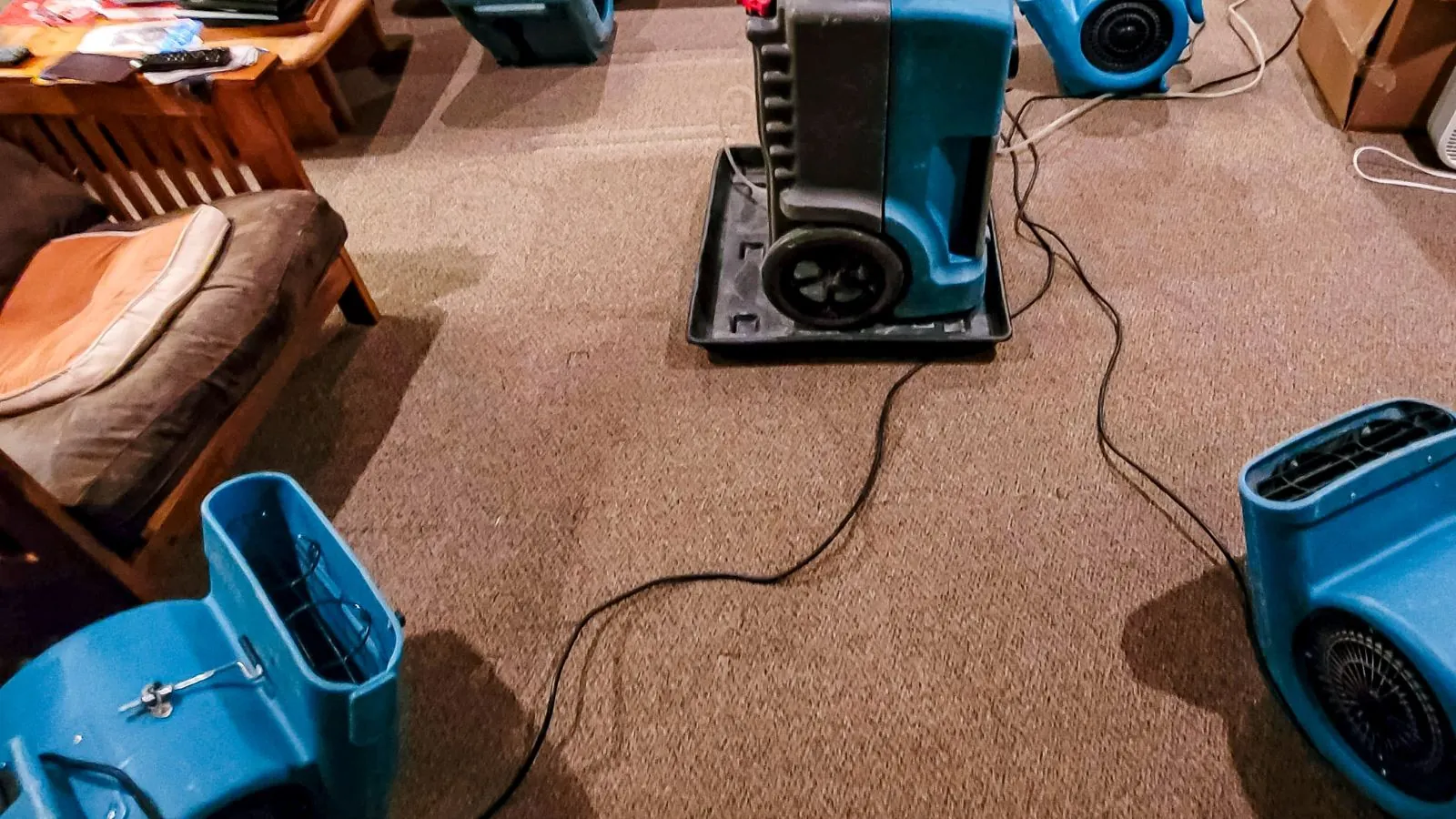
In Saint James, NY, water damage restoration, remediation and rebuild are three terms that often get mixed together on estimates and in conversation. Restoration generally means drying and cleaning a building and its contents back toward pre-loss condition. Remediation is the narrower word for removing or containing a specific hazard such as mold.
Knowing the difference helps you read a scope of work and ask better questions. Mold work in particular follows its own rules, which the mold remediation page explains.
What each word means
Restoration is the umbrella for getting a wet building back to a dry, clean and usable state. It starts with water removal and moisture mapping, moves through drying with air movers and dehumidifiers, and may include cleaning contents and deodorizing.
Remediation is used when a specific contaminant has to be dealt with, such as mold growth or sewage. The word signals containment, controlled removal of affected materials and cleaning to a defined result. Repair and rebuild come after, and they are construction work rather than drying work.
A useful test is to ask what the crew is trying to protect. Restoration protects the building and what is in it from further loss. Remediation protects the occupants and the rest of the house from a defined contaminant. Rebuild protects nothing in particular and simply returns the finishes you had before.
Mitigation, repair and rebuild in order
Most losses move through three stages. Mitigation comes first and aims to stop further damage, with water extraction, removal of materials that cannot dry, and equipment set up to dry the rest. A pump or extraction unit and a thermal imaging camera or moisture meter are the usual starting tools.
Repair follows once readings show materials are dry, covering things like replacing insulation, drywall patches and flooring. Rebuild is the larger version of repair, used when whole assemblies such as cabinets, a ceiling or a floor system were removed and must be put back.
Restoration vs remediation vs rebuild at a glance
The table compares the three side by side. A single job can include all three, but the work, the trade and the paperwork differ.
| Term | Main goal | Typical work | Who does it | What to ask |
|---|---|---|---|---|
| Restoration | Dry and clean the structure and contents | Extraction, moisture mapping, air movers, dehumidifiers, cleaning | Water damage crews | Which industry standard do your crews work to? |
| Remediation | Remove or contain a hazard such as mold | Containment, negative air, HEPA filtration, removal of affected materials | Licensed mold remediation contractors in New York | May I see your New York license? |
| Rebuild | Put finished surfaces back | Drywall, insulation, flooring, cabinets, paint | Licensed contractors and trades | Is a permit needed and who pulls it? |
What ANSI/IICRC S500 and S520 are
ANSI/IICRC S500 is a published industry standard for professional water damage restoration, and ANSI/IICRC S520 is the published standard for professional mold remediation. They are guidelines that describe procedures, not laws, and a company may say it follows them without meeting them.
Ask any company whether its crews work to them, and how. A good answer mentions water categories, moisture readings taken at the start and during drying, and written drying goals. Where the work involves mold, a good answer also describes containment and air filtration.
A company that cannot describe how it records starting moisture readings and daily progress is asking you to take the drying on trust. Written logs let you and your insurer see when materials reached their drying goal, and they give a rebuild contractor a clear starting point.
Why mold remediation is licensed in New York
Mold work is regulated because poor containment can spread material through a home, and because the law separates the person who judges the problem from the person who is paid to fix it. New York therefore licenses mold assessors and mold remediation contractors, and the rule applies to projects greater than 10 square feet.
Drying a wet wall is not the same as removing mold from it. If a crew finds growth during drying, ask whether the job now falls under the licensing rule and who will handle it. The structural drying page describes the drying side that comes before any rebuild.
How to read a scope of work
A scope should say which words apply to which rooms, so you can see where drying ends and rebuild begins. Ask for line items rather than a single total, and ask what will be left open for you to finish. Keep the written scope with your photos and receipts so every change to the plan can be traced later.
- Which rooms are being dried and which are being demolished
- What equipment is planned and for how many days
- What readings mark the end of drying
- Whether any mold work is part of the job and who is licensed to do it
- Whether the rebuild is included or quoted separately
- Who obtains any permit
Saint James note: mold licensing and the permit office
Under New York Labor Law Article 32, mold assessors and mold remediation contractors must be licensed by the state. Labor Law 936 says a licensee may not perform both mold assessment and mold remediation on the same property. In practice, a Saint James homeowner with a large mold job should expect to hire two separate licensees and should ask each for its New York license.
For the rebuild stage, the Town of Smithtown Building Department is the permit office for most buildings in Saint James. It enforces the New York State Building Code, issues permits and inspects construction. Its online permit page lists applications such as Electric Only and Plumbing Only but says nothing specific about water damage repair, so ask the department whether your repair needs a permit before work starts.
Frequently asked questions
Is restoration the same as remediation?
Not exactly. Restoration is the broader work of drying and cleaning a building after water. Remediation usually refers to removing or containing a specific hazard such as mold or sewage.
What does mitigation mean on a water damage estimate?
It means the steps taken to stop further damage, such as removing standing water, taking out materials that cannot dry and setting drying equipment. Repair and rebuild come afterward.
What are ANSI/IICRC S500 and S520?
They are published industry standards, S500 for water damage restoration and S520 for mold remediation. Ask any company whether its crews work to them and how they document it.
Do I need a licensed contractor for mold in New York?
For projects greater than 10 square feet, mold assessors and remediation contractors must be licensed, according to the New York State Department of Labor. Owners working on their own home are exempt.
Who handles the rebuild after drying is finished?
Often a separate licensed contractor or trade, although some companies offer both. Ask whether rebuild is included in the quote, who is licensed for each part and who applies for any permit. For nearby areas, the Lake Grove page notes that the village has its own building department.
Which office decides whether my repair in Saint James needs a permit?
The Town of Smithtown Building Department. Ask it if your repair needs a permit, because its permit page does not say anything specific about water damage. If you want the drying side of a job explained, you can call our 24/7 dispatch line and ask how the work is staged. The Smithtown page covers the same permit office.