
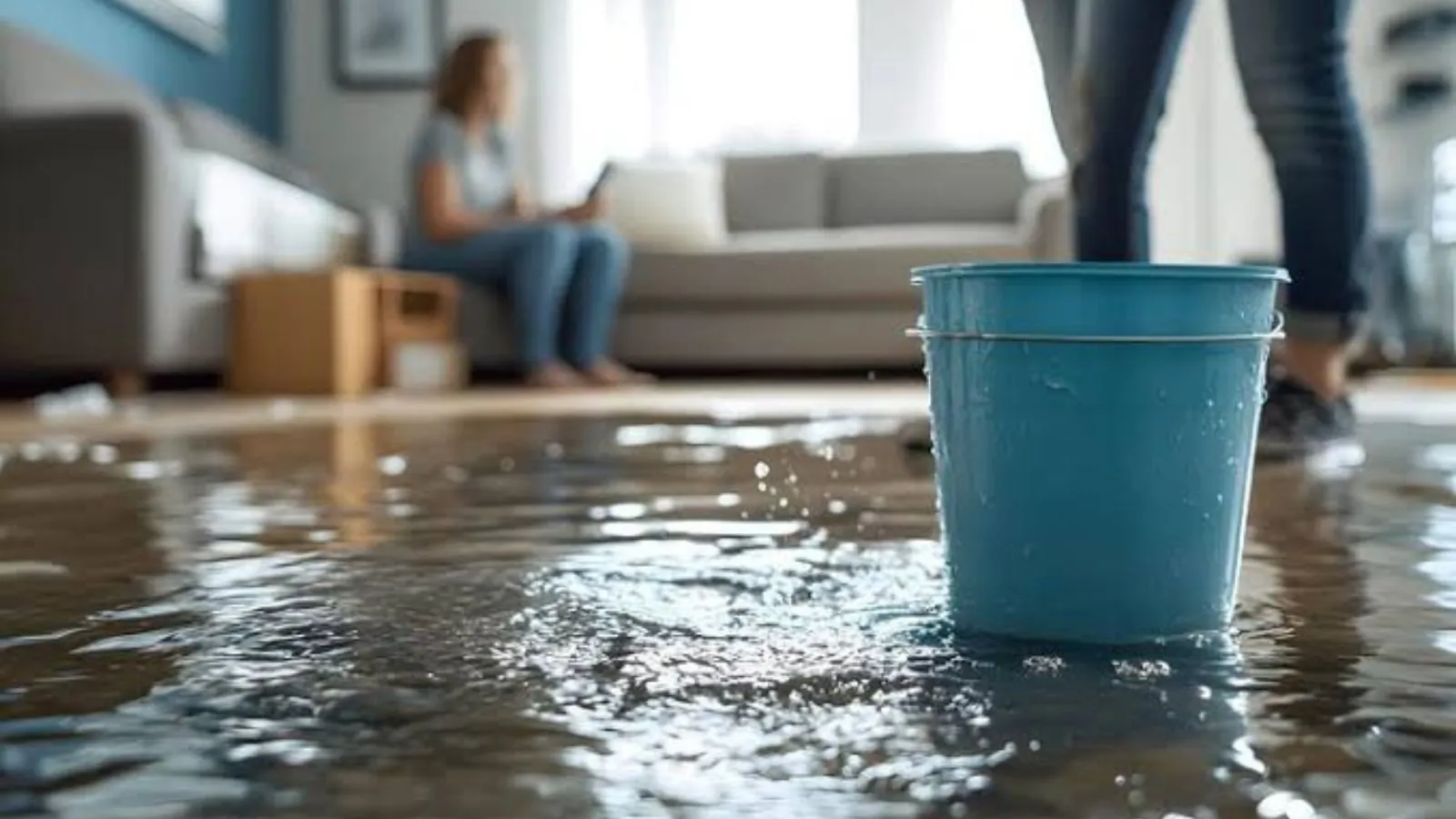
A water damage insurance claim in Saint James, NY is the formal request you make to your insurer to review a loss under your policy. The paperwork starts the moment you find the water, because photos, notes and receipts are easiest to collect before the room changes.
This guide covers the process and the documents, not what any policy will pay. When the water is still coming in, the burst pipe page covers the immediate steps for that source.
Step one is stopping the water
Shut the water at its source before you do anything else. For a plumbing failure that means the fixture shut-off valve or the main valve where the line enters the house, and for a storm leak it may mean placing buckets and moving furniture away from the drip line.
If water has reached outlets or the panel, stay out and leave the electricity alone until a licensed electrician says otherwise. Your insurer will want to know the water was stopped promptly, so note the time you found it and the time you shut it off. A quick photo of the closed valve and the dry floor around it also shows the leak stopped.
Photograph and video before you touch anything
Take wide shots of every affected room, then close-ups of each wet surface, stain and damaged item. A slow walkthrough video with you narrating the room, the date and what you see adds context that stills cannot. Include the source, such as the split hose or the stained ceiling, and anything that shows the water line on walls.
Do this before you mop, move rugs, pull carpet pad or tear out drywall. The New York Department of Financial Services says to document your losses before cleaning anything up, and every cleanup step removes some evidence.
What to document and how
Different kinds of loss need different kinds of proof. This table pairs each item with a simple method that works on a phone.
| What to document | How to do it | Why it helps |
|---|---|---|
| Source of the water | Photo and short video of the failed part plus a note of the time | Shows the cause in plain view |
| Affected rooms and surfaces | Wide shots, close-ups and a narrated walkthrough video | Shows the extent before cleanup |
| Damaged belongings | Photo of each item, its label and serial number where present | Supports the inventory later |
| Moisture readings | Ask the drying crew for meter readings by room and date | Shows how wet materials were and how drying progressed |
| Conversations | Date, time, name and a summary of each call or visit | Keeps the timeline straight |
| Costs | Keep every receipt and invoice, and note the date of each purchase | Lets you list out-of-pocket costs accurately |
Mitigation and the items the adjuster may want to see
Many policies expect you to take reasonable steps to prevent further damage, such as stopping the leak, extracting standing water and starting drying. Ask your insurer what it expects and keep the receipts for any emergency work. Removing standing water and wet materials quickly limits spreading, and the structural drying page explains how moisture meters, air movers and dehumidifiers track that process.
Keep damaged items until the adjuster allows disposal if asked. If something cannot be kept safely, such as a sagging ceiling section or contaminated material, photograph it thoroughly and tell your insurer before it goes.
Build an itemized inventory and keep every receipt
Write a room-by-room list of damaged items with a description, brand, rough age, where you bought it and what a replacement would cost. Use your photos to jog your memory, and open closets and cabinets so nothing wet is forgotten.
Keep receipts for hotel stays, meals, equipment rental and emergency supplies in one envelope or one folder on your phone. Ask your insurer which living expenses it recognizes, since policies differ. A running spreadsheet with a date, vendor and amount makes it easier to answer questions later.
- Item name, brand and model
- Approximate age and purchase place
- Replacement cost estimate
- A photo filename that matches the item
- A condition note such as soaked, stained or warped
Get the repair scope in writing
Ask each company that inspects the home to put its scope of work in writing, listing rooms, materials to be removed and the drying equipment planned. Compare it with your photos and your insurer's own scope. If they differ, ask both parties to explain the gap and keep those answers.
Repairs sometimes need permits, and the permit office depends on the address. Saint James and Smithtown fall under the Town of Smithtown Building Department, while Lake Grove has its own village building department. No good file promises approval or payment, since the adjuster decides under your policy.
When you are ready to talk through next steps for the water itself, you can call our 24/7 dispatch line and ask about our 24/7 dispatch.
Saint James note: what New York DFS says about timing and documents
The New York Department of Financial Services advises policyholders to file claims as soon as possible after losses occur. For a Saint James homeowner, that means contacting your insurer promptly even if you do not yet know the full extent of the damage, and adding details as you learn them.
The same state agency says to document your losses before cleaning anything up. That is why the photo and video step comes before the wet vacuum, the trash bags and the carpet pad removal.
Open a notes file on your phone and record the date and time you first saw the water and the date you contacted your insurer. Those two entries are easy to forget later and hard to reconstruct from memory.
Frequently asked questions
How soon should I report water damage to my insurer?
As soon as you reasonably can. The New York Department of Financial Services says to file claims as soon as possible after losses occur. Your policy may also contain its own notice wording, so ask your insurer what it requires.
Should I take photos before I start cleaning up?
Yes. Photograph and video the source, each room and each damaged item before you mop, move furniture or remove materials. The state insurance regulator advises documenting losses before cleaning anything up.
Can I throw away damaged items before the adjuster sees them?
Keep them until the adjuster allows disposal if asked. If something is unsafe to keep, photograph it from several angles, record what it was, and tell your insurer before disposal.
Does a drying crew deal with my insurance company for me?
You remain the policyholder who files and manages the claim. A restoration company can supply documents such as photos, moisture readings and a written scope that you can share with your insurer. Ask any company what paperwork it provides.
Will my claim be approved if I follow every step?
No list of steps can promise approval or payment. Good records make the loss easier to understand, and your insurer decides what is covered under your policy.
Who do I ask about repair permits in Saint James?
The Town of Smithtown Building Department is the permit office for most buildings in Saint James. Its online residential permit page lists applications such as Electric Only and Plumbing Only but says nothing specific about water damage repair, so ask the department if your repair needs a permit.