
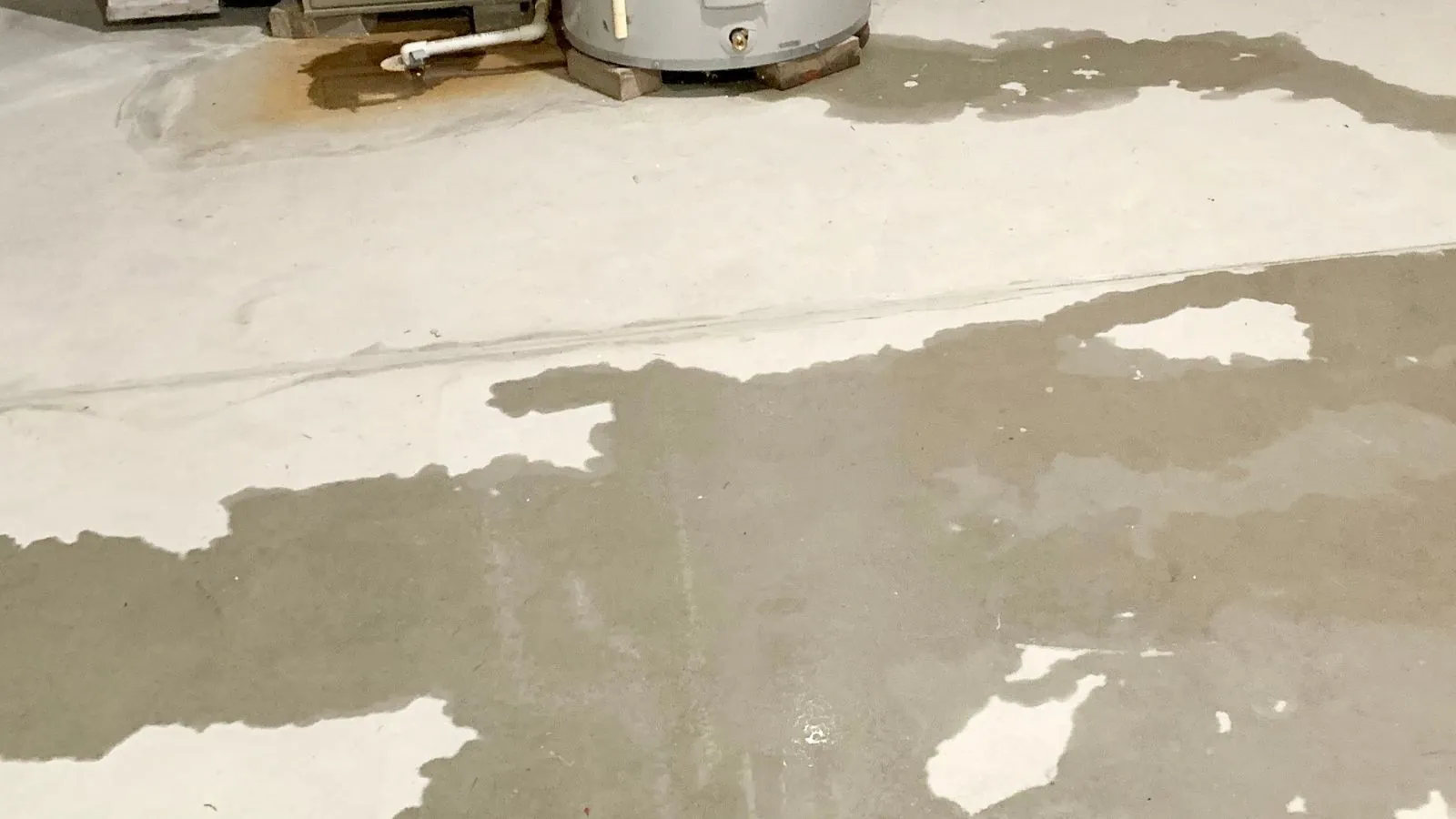
A sudden jump in a water bill is a sharp rise in usage that your household habits do not explain. For homeowners in Saint James, NY, the cause may be a running toilet, a sprinkler fault, a billing error or a line leaking under the slab or yard.
This guide sorts the usual suspects, shows how to run a basic meter-dial test at home, and explains when to call your water district. Start with the easy checks, since most causes can be narrowed down in an afternoon.
What a sudden jump in usage can mean
Usage climbs for ordinary reasons too, such as guests, a filled pool or a new garden. When none of those apply, think about water that moves without anyone using it.
The usual causes are a toilet flapper that no longer seals, a dripping or leaking fixture, or an irrigation system with a stuck zone. Less common causes are a leak on the line between the street and the house, a leak in a pipe under a slab, or a meter reading that was estimated or entered wrong. Each leaves different clues.
- Toilet flapper that lets water trickle into the bowl
- Leaking faucet, shower valve or supply line under a sink
- Irrigation zone stuck open or a broken sprinkler head
- Leak in a buried line or under a concrete slab
- Meter reading error or an estimated read
Symptom, likely cause and first check
Match what you notice to the table, then do the first check listed. It will often save a service call.
| Symptom | Likely cause | First check |
|---|---|---|
| Toilet hisses or refills with no one using it | Worn flapper or fill valve | Add food coloring to the tank and see whether color reaches the bowl without flushing |
| Meter keeps moving with everything off | A leak somewhere in the house or on the buried line | Run the meter-dial test below |
| Wet or unusually green patch of lawn, or soft ground near the line | Leak in a buried supply line or irrigation line | Look at the path between the meter and the house |
| Warm spot on a floor or the sound of running water in a quiet house | Possible leak in a pipe under the slab | Listen near walls and check the floor with your hand |
| Bill spikes in summer only | Irrigation fault or a very heavy watering schedule | Run each zone and watch for geysers, pooling or a zone that never shuts off |
| Bill jumps but the meter test stays still | Estimated read, misread meter or billing error | Compare the meter number to the bill and ask the district to confirm |
The meter-dial test you can do at home
Your water meter has a small dial or triangle called a low-flow indicator. It spins or flickers when even a tiny flow passes through. That makes it a handy way to tell whether water is moving when it should not be.
Take a photo of the meter face at the start and again at the end, so you have a record of what you saw.
- Turn off every tap and shower, and make sure no one flushes a toilet.
- Pause the dishwasher, washing machine, ice maker, humidifier and any irrigation system.
- Find the meter and lift the cover, which may sit in a ground box near the street or inside the house.
- Watch the low-flow indicator. If it is turning or the numbers are climbing, water is moving somewhere.
- Wait for a while without using any water, then look again. Compare the reading to your photo.
- If the indicator stays still, the leak may be intermittent, such as a toilet that runs only now and then.
Hidden leaks under the slab and in buried lines
If the meter moves with everything off, and the toilet and sprinklers are cleared, suspect a concealed line. These leaks can run for weeks before a stain appears. Warm floor patches, the sound of running water and damp carpet along a wall are common clues.
A leak under concrete is a different problem from a pipe that bursts in a wall. See slab leak water damage for how those show up, and burst pipe water damage for the sudden, visible version. If the meter test says water is escaping and you cannot find it, a leak detection professional can trace it before anyone opens a floor.
Toilets, fixtures and irrigation are the cheap suspects
Before you assume the worst, rule out the fixtures. A toilet that runs silently can waste a surprising amount of water, and a flapper is an inexpensive part. A dye test with a few drops of food coloring in the tank, left alone without flushing, tells you in a short time.
Check the washing machine hoses, the dishwasher supply and the water heater connections for drips, and watch your irrigation controller, since a stuck valve can run at night when nobody is looking. Seasonal systems also fail at start-up, when a winter crack becomes visible.
When to call your water district and what to ask
Contact your water supplier if the meter test shows a leak you cannot find, or if it shows nothing and the bill still looks wrong. Ask the district to re-read the meter, to confirm whether past reads were actual or estimated, and to share your usage history.
Ask also whether the district has any process for adjusting a bill after a leak is repaired. Policies vary, and you should keep your repair invoice and photos. Call (934) 223-1875 if the hidden leak has already damaged floors or walls, and check your policy, since sudden and accidental damage is often covered while gradual leaks often are not.
Saint James note: a leak is the owner's to find
The Suffolk County Hazard Mitigation Plan and the Town of Smithtown code refer to a water district that serves parts of Smithtown and Saint James. If that is your supplier, call the district first with your meter reading. Check the name on your bill, because suppliers can differ from one neighborhood to the next.
Census QuickFacts shows that 87.7% of Saint James housing is owner-occupied, so in most homes there is no landlord to call and the leak is the owner's to track down. That makes the meter test the quickest first step. Neighbors in Nesconset or Lake Grove may have a different supplier, so read your own bill rather than assume.
Frequently asked questions
Why did my water bill suddenly double?
Common reasons are a running toilet, a leaking fixture, an irrigation fault, a buried or under-slab leak, or an estimated or misread meter. Run the meter-dial test with all water off to find out whether water is moving.
How do I know if I have a leak under the slab?
Signs include a meter that moves with everything off, warm floor spots, the sound of running water, damp flooring and a bill that keeps climbing. A leak detection professional can confirm the location.
What is the low-flow indicator on my meter?
It is a small dial, triangle or wheel that turns when a tiny amount of water passes through the meter. If it moves while every fixture is off, water is going somewhere.
Could the meter reading be wrong?
Yes. Bills are sometimes based on estimated reads or a misread dial. Compare the number on your meter to the number on the bill and ask the district to check.
My meter test shows no movement but the bill is high. Now what?
The leak may be intermittent, or the usage may be seasonal. Check irrigation, a toilet that runs occasionally, and billing dates, then ask your water district to review the reads and your usage history.
Who do I call about a high water bill in Saint James?
Call the water district named on your bill. The county plan and Town code refer to a district serving parts of Smithtown and Saint James, so if that is your supplier, call the district. If the bill names another provider, call that one.