
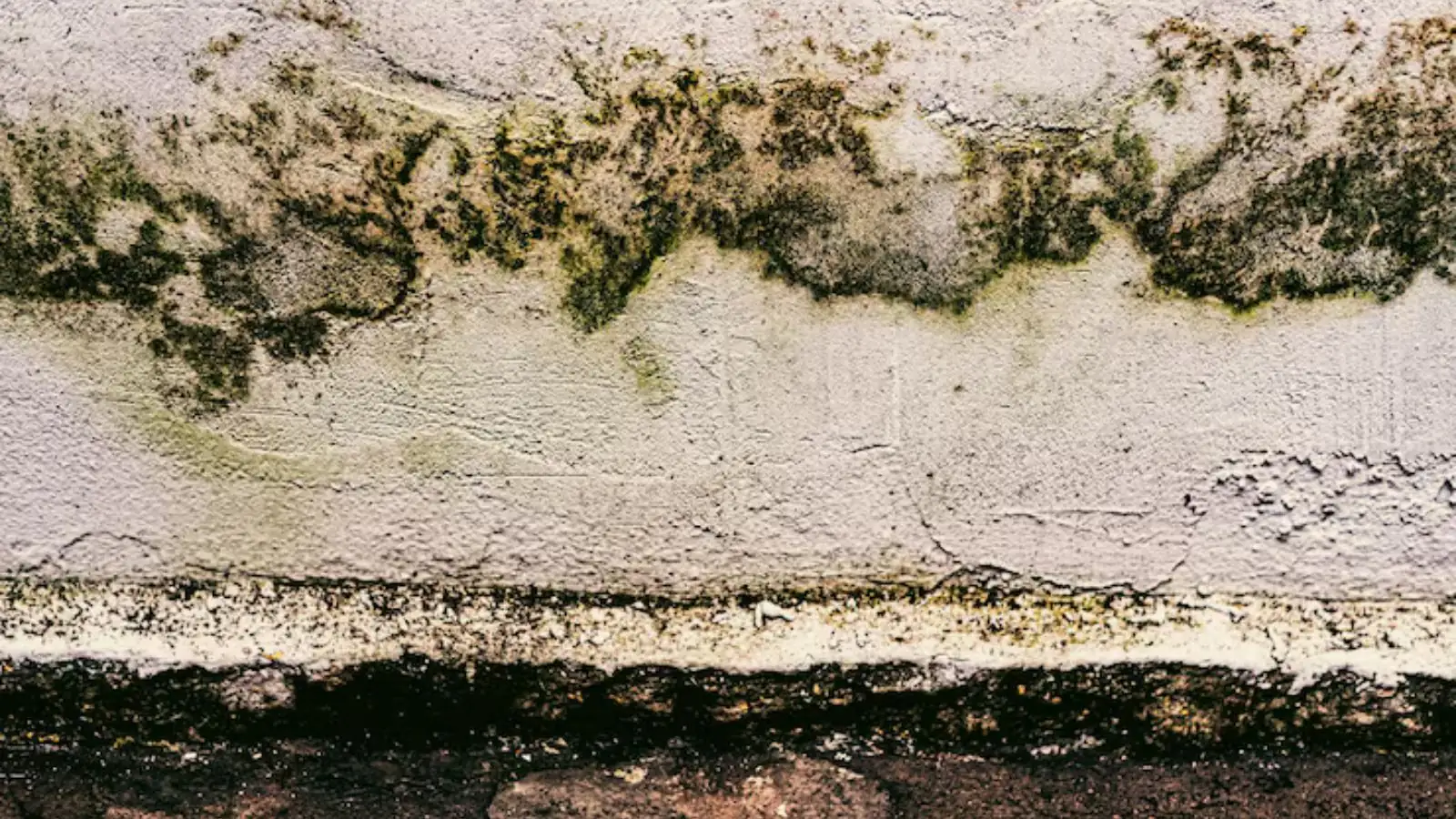
A musty smell after water damage in Saint James, NY is the stale, earthy odor that lingers in a room once the visible water has been cleaned up. It is a signal and not a diagnosis, because it tells you that moisture is trapped somewhere, not what kind or how much.
This guide covers the usual hiding places, plain checks you can run with a flashlight and your hands, why sprays cannot fix it and the point where the question becomes a mold question.
Why the smell stays after the water is gone
Odor comes from materials, not from air. When drywall, wood or fabric absorbs water and stays damp, it gives off a stale smell for as long as it remains wet. Wiping the surface or running a fan across the room moves the smell around without drying what sits behind it.
Building materials dry at very different speeds. A hardwood plank or a painted wall may feel dry in a day, while the insulation inside the wall cavity, the pad under the carpet and the plywood subfloor can hold water much longer. The smell tracks the slowest material, not the fastest.
That is why a room can look fine and smell wrong. Surface dryness is easy to fake, and the smell is often the first honest report from the part of the structure you cannot see.
Where the smell is, the likely source and your next step
Location is the best clue you have. Use this table to match what you notice to the most likely source and a sensible next move. These are common patterns, not a diagnosis.
| Where the smell is | Likely source | Next step |
|---|---|---|
| Strongest at the carpet edge or when you walk on it | Damp carpet pad or a wet subfloor under it | Press a flat hand on the carpet, then lift a corner at a wall to check the pad |
| Near the base of a wall, worse on one side | Wet drywall or insulation in the wall cavity | Check the baseboard for staining, then have the wall read with a moisture meter |
| Under a ceiling stain, even after it dried | Wet insulation above the ceiling | Check the attic or ceiling cavity for damp, compressed insulation |
| Only when the heat or AC runs | Damp ductwork, a wet air handler pan or a clogged condensate line | Look at the drain pan and line, and change the filter |
| Bathroom, kitchen or laundry cabinet | Slow leak under a sink or behind an appliance | Empty the cabinet, dry-wipe the base and check supply lines with a paper towel |
| Whole basement or crawl space | Damp slab, wet insulation or standing moisture | Look for pooling, a high humidity reading and any sump pump trouble |
Plain checks to find the source
You do not need special tools to start. A flashlight, a dry paper towel and your own hands will find a surprising amount. Begin where the smell is strongest and work outward, since moisture usually spreads away from its source.
- Follow your nose at floor level, near baseboards, in closets and inside cabinets under sinks.
- Press your palm against the wall and the floor. Cool, clammy or slightly soft material is a sign of trapped moisture.
- Shine a light across painted walls at a low angle. Bubbling, peeling or ripples show the layer behind has been wet.
- Lift a corner of carpet at a wall and check the pad and the tack strip for damp or stains.
- Press a dry paper towel against suspect spots for a few seconds and see if it picks up moisture.
- Look at the HVAC drain pan, the condensate line, and the filter, since a clogged line can keep water sitting in the system.
Using a moisture meter and thermal camera
Hands only tell you so much. A pin or pinless moisture meter reads how wet drywall, wood and subfloor are compared with a dry sample from another room. Thermal imaging cameras show cool patches where wet materials sit, which helps a technician decide where to take readings.
Neither tool replaces judgment. A cool spot on a camera can also be an uninsulated stud or a draft, so readings should be confirmed with a meter and noted on a map of the room.
Consumer meters are sold at hardware stores, but a professional dryer usually checks inside wall cavities and under flooring too. A structure that is being dried should have readings recorded over several days, which is how structural drying shows when the job is truly done.
Why air fresheners and cleaning fail
A spray covers odor molecules for a short time. It does not remove the damp material producing them, so the smell returns as soon as the scent fades. Candles, baking soda boxes and ozone-style gadgets run into the same wall.
Cleaning also has limits. Wiping a damp wall with a cloth or scrubbing a rug can clean the surface, but it cannot pull water out of insulation or a plywood subfloor. Added water from a mop can slow the drying you actually need.
Drying is the repair. Once the wet material reaches a dry reading, odors fade on their own, and if a material cannot be dried, it is removed. Cleaning is the finishing step, not the first one.
When a musty smell becomes a mold question
A musty smell does not prove mold, and a lack of smell does not rule it out. What matters is whether materials stayed wet and whether there is visible growth, staining or fuzzy spots. This guide makes no health claims, so if anyone in the home has concerns, talk with a doctor.
If you see growth, take photos and avoid disturbing it, since scrubbing can spread dust. A mold remediation professional can tell you what is needed. Ask whether the crew works to ANSI/IICRC S520, the published industry standard for mold. The first job is still to fix the moisture source.
Think of the order as moisture first, then removal of what cannot be dried, then cleanup. Removing mold from a damp wall that keeps getting wet only buys time.
Saint James note: what the state says about mold
The New York State Department of Labor states that the mere presence of mold does not trigger any obligation to obtain an assessment or perform remediation. That means a musty smell on its own does not require you to hire anyone by law. It does mean you should fix the moisture, and look at the size of any visible growth before deciding.
The same state law, Labor Law Article 32, covers projects greater than 10 square feet. Under that size, a homeowner can clean it themselves if no one in the home is mold-sensitive, and owners working on their own home are exempt. Over 10 square feet, licensed mold professionals are required, and a licensee may not perform both mold assessment and mold remediation on the same property.
The state rule is the same whether you rent in Lake Grove, own in Saint James or live in Nesconset, so the 10 square foot line is a useful way to size up a patch you find.
Frequently asked questions
Can a musty smell come from wet insulation?
Yes. Insulation inside a wall or above a ceiling holds water and dries slowly, so it is a common hidden source. A moisture meter or a look in the cavity will confirm it.
Will a dehumidifier get rid of the smell?
A dehumidifier lowers humidity in the air, which helps. It cannot reach water trapped in a wall or under a floor, so a smell that persists usually means the material itself is still wet.
Is a musty smell always mold?
No. A musty smell means moisture is present, and mold may or may not be growing. Look for visible growth and check how long materials stayed wet. This is not a diagnosis and not a health statement.
How do I tell drying from cleaning?
Drying removes water from materials until they match a dry reading, and it ends the cause of the odor. Cleaning removes dirt and residue from surfaces. Cleaning a wet wall does not dry it.
Should I rip out carpet that smells musty?
Not before checking. Carpet pad that stayed wet is often replaced, while the carpet itself can sometimes be dried and saved if the water was clean. A professional with a meter can tell the difference. See how carpet water damage restoration decisions get made.
Do I need a license to clean up a small patch of mold at my house in Saint James?
Owners working on their own home are exempt from the state licensing rule, and under 10 square feet an owner may clean it themselves if no one is mold-sensitive. Larger projects fall under the licensing law. For a damp smell with no growth, call the 24/7 line to talk through next steps.