
To remove mold from a basement in Saint James, NY, you clean or discard the affected material and correct whatever keeps it damp. Mold is a fungus that grows on organic surfaces when moisture lingers, so scrubbing without fixing the water source usually means repeating the job.
This guide is for homeowners weighing a do-it-yourself cleanup against calling a licensed professional. If the room is also wet, the basement water damage cleanup page covers the water side first.
Find and fix the moisture first
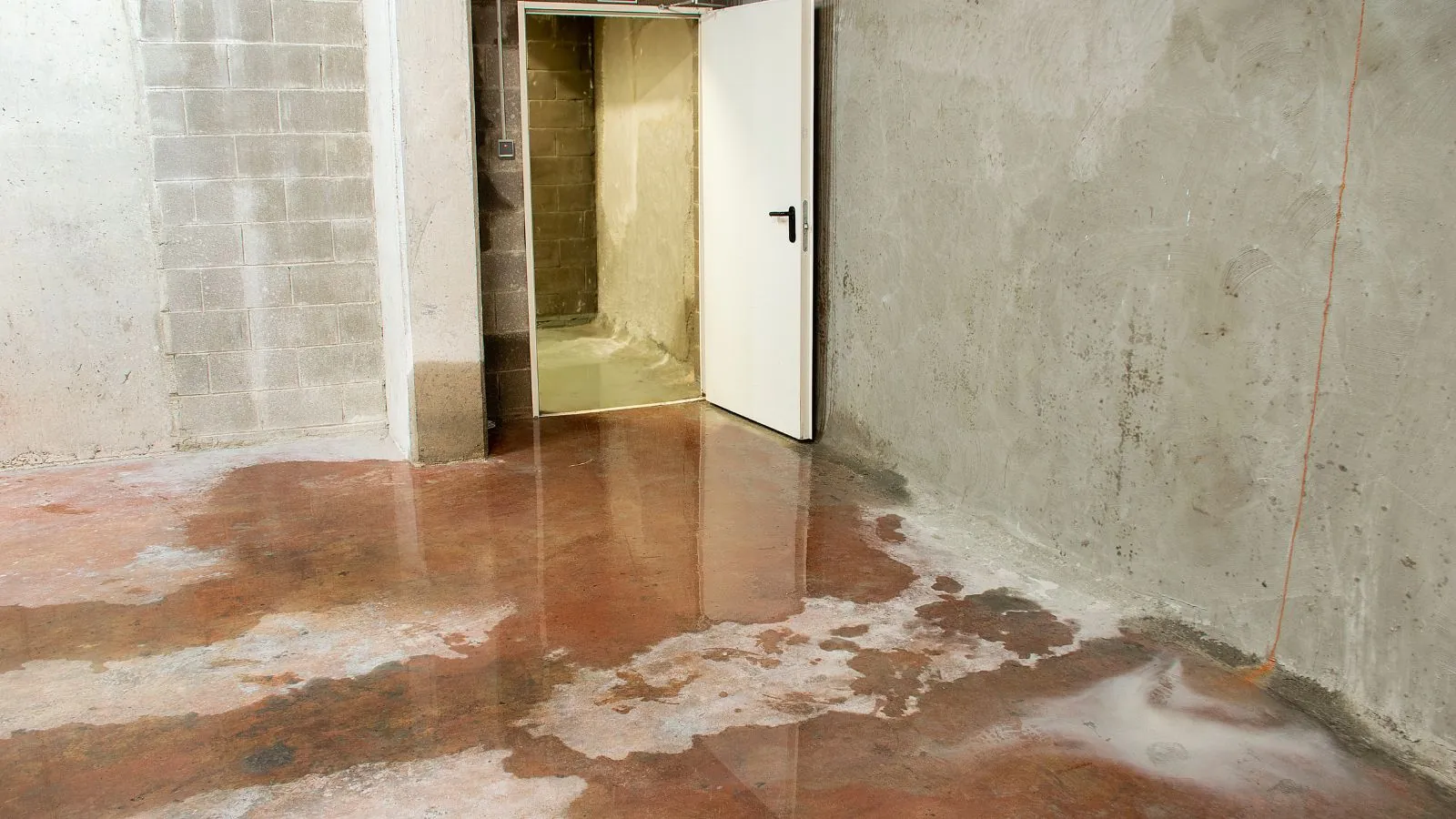
Mold needs a damp surface, so start by finding where the water comes from. Take a flashlight and a notepad and walk the basement slowly, noting each spot you check. Look for stains along the bottom of foundation walls, rust at the base of the water heater, drips from overhead pipes and a dryer vent that ends inside the house. A pin-type moisture meter reads wood and drywall, and a cheap hygrometer shows the humidity in the room.
Another common pattern is a basement that smells musty only in summer, when warm humid air meets cool concrete and water condenses on walls and pipes. A dehumidifier and insulated cold-water pipes address that, whereas a wall crack needs a repair. Common sources include groundwater seeping through a wall crack, a failed sump pump, a downspout that dumps beside the foundation and condensation on cold pipes. Until the source is repaired, any cleaning is temporary.
What counts as a small area
The New York State Department of Labor draws its licensing line at 10 square feet. A patch about 3 feet by 3 feet is 9 square feet, so a single stain the size of a bath mat sits near the line. Measure the visible growth, and keep in mind that it may continue behind paneling, under carpet or inside a wall.
If you cannot see the full extent, treat the job as larger than it looks. Pull back a corner of carpet pad or check the back of a baseboard with a moisture meter before you decide to handle it yourself.
Hard surfaces versus porous materials
Mold sits on the surface of concrete and sealed tile, but it grows into porous materials. That is why the decision depends on what the material is. The table below separates what homeowners usually clean from what usually has to be removed.
| Material | Usually cleaned | Usually removed |
|---|---|---|
| Poured concrete and block | Yes, with detergent, a stiff brush and thorough drying | Only if crumbling or contaminated deeply |
| Sealed tile and metal | Yes, scrub and rinse | Rarely |
| Framing lumber with light surface growth | Often, scrub and dry fully | If soft, rotted or deeply stained |
| Drywall | Rarely worth trying | Usually cut out and replaced |
| Carpet and pad | Rarely | Usually removed |
| Insulation | No | Usually removed |
| Cardboard and paper goods | No | Discard |
Protective gear and the bleach rule
Wear an N95 respirator, waterproof gloves and eye protection, and ventilate the room if you can. Seal cut-out material in heavy trash bags before carrying it through the house so you do not spread spores.
The New York State Department of Health says never to mix bleach with ammonia. Many glass cleaners and some household products contain ammonia, so keep the products separate and never combine them in one bucket. Plain detergent and water is often enough for a hard surface, and the surface must be dried completely afterward.
When to stop and call a professional
Stop the do-it-yourself approach when the job passes what a household can safely contain. A licensed mold remediation company works to the S520 industry standard with containment barriers, negative air machines and HEPA filtration. The mold remediation page explains how that process works and when it applies.
- The affected area is larger than 10 square feet or you cannot tell how far it extends.
- Mold appears on drywall, insulation, ceiling tiles or carpet.
- Someone in the home is mold-sensitive.
- Sewage or floodwater caused the damage.
- The musty smell returns after you cleaned and dried the area.
- You find water inside wall cavities or around the electrical panel.
Keep the basement dry afterward
Run a dehumidifier sized for the space and empty or drain it regularly. Point downspouts away from the foundation, check that the ground slopes away from the house, and test the sump pump by lifting its float.
No cleanup can promise a permanent result, so keep watching. Check the cleaned area weekly for new staining, odor or dampness, and photograph it so you can compare. The same routine applies to basements in Nesconset and Smithtown, since moisture sources like downspouts and sump pumps are the same everywhere. If moisture keeps returning, call our 24/7 dispatch line to talk through what a drying assessment involves.
Saint James note: the New York mold licensing rules
Under Article 32 of the New York Labor Law, administered by the New York State Department of Labor, mold assessors and mold remediation contractors must be licensed. The law applies to projects greater than 10 square feet. For a smaller area, the Department of Labor says an owner may clean it up if no one in the home is mold-sensitive.
Owners working on their own home are exempt from the licensing requirement, so a Saint James homeowner can legally do the job personally. The Department also states that the mere presence of mold does not require assessment or remediation, so finding a stain does not by itself mean you must hire anyone.
If you hire out a larger job, Labor Law 936 says a licensee may not perform both mold assessment and mold remediation on the same property. Expect two separate companies, one to assess and one to remove, and ask each to show its New York license before work starts.
Frequently asked questions
Can I remove basement mold myself?
For a small area on a hard surface, many homeowners do. The New York State Department of Labor says an owner may clean an area under 10 square feet if no one in the home is mold-sensitive. Fix the moisture first, wear an N95 and gloves, and stop if the job grows.
Can I use bleach on basement mold?
Some people use it on hard, nonporous surfaces, but detergent and water is often enough. If you do use bleach, never mix it with ammonia, as the New York State Department of Health warns. Ventilate the room and let the surface dry.
What protective gear should I wear?
An N95 respirator and waterproof gloves at a minimum, plus eye protection and clothes you can wash or discard. Bag removed material before carrying it out so debris stays contained.
Do I need a mold test before I clean?
Not necessarily. The Department of Labor says the mere presence of mold does not trigger a duty to get an assessment or remediation. A test does not remove anything, so the priority is finding and fixing the water source.
Will painting over mold solve it?
No. Paint can hide a stain while the growth continues underneath. Clean or remove the affected material, dry it fully and correct the moisture source before any finish goes on.
Do I need a license to remove mold from my own Saint James basement?
No. The New York State Department of Labor exempts owners working on their own home. A contractor you hire for a project greater than 10 square feet must hold a mold remediation license, and an assessor and a remediator may not be the same licensee on the same property.