
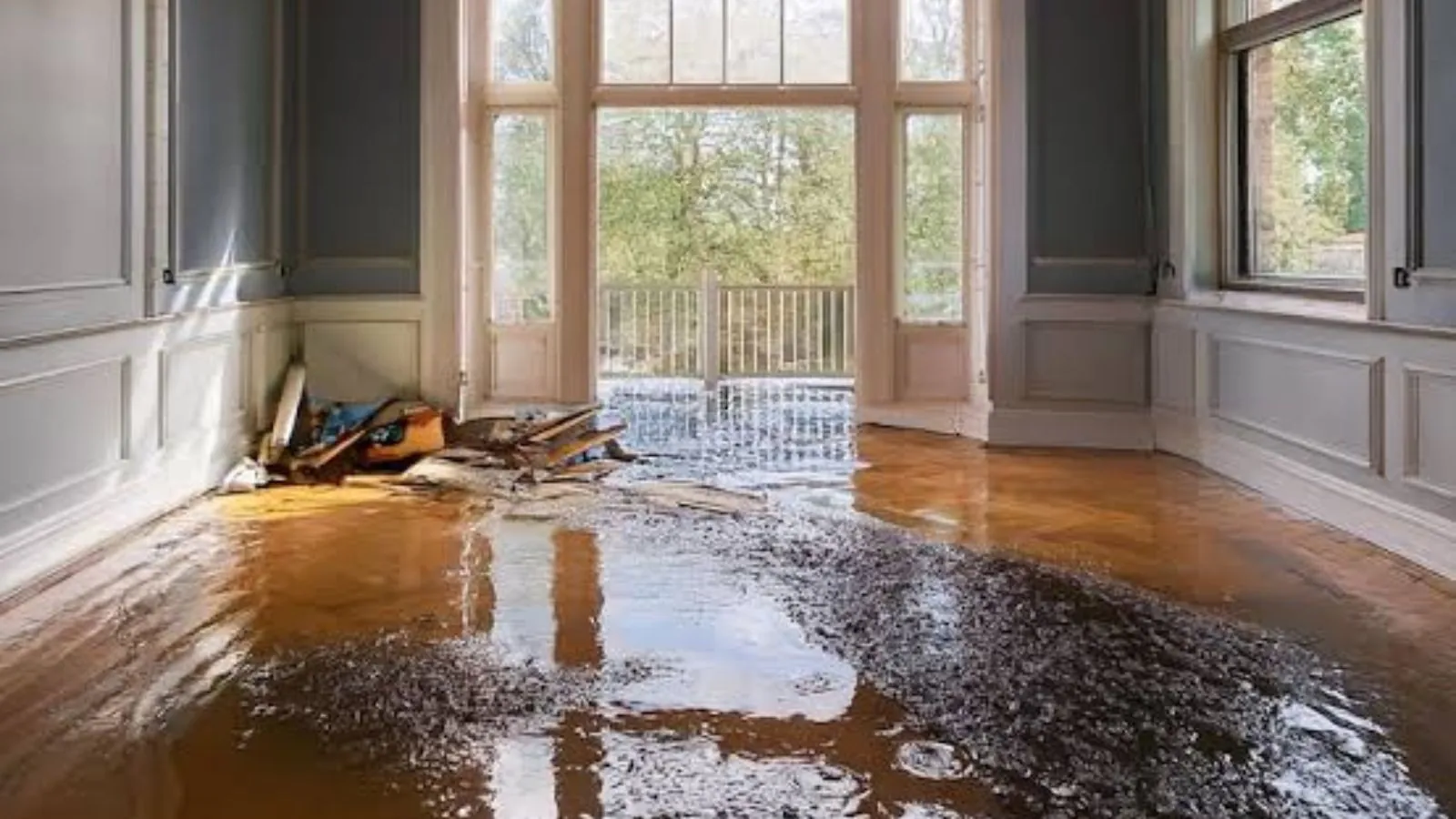
Does homeowners insurance cover water damage in Saint James, NY? Often yes when the water arrives suddenly and by accident, and often no when it seeps in slowly or rises from outside as flood. A homeowners policy is a contract built from covered causes, exclusions and endorsements, so the source of the water matters more than the amount of damage.
This guide stays on coverage questions. It shows how insurers commonly sort water losses and which gaps people find too late. If water is standing in the house right now, the water extraction page covers getting it out.
Sudden and accidental versus gradual damage
Most standard policies are written around a sudden and accidental event. A washing machine hose that splits on a Tuesday night fits that wording. A drip under the kitchen sink that runs for six months usually does not, because many policies exclude continuous or repeated seepage over time.
The wording differs from one policy to the next, so the same wet drywall can be treated differently by two insurers. Some policies pay for the water damage a burst pipe causes but not for the cost of repairing the pipe itself. Ask your insurer where your policy draws that line, and read the exclusions page, not just the coverage summary.
- A sudden event such as a split supply line is often treated as a covered cause.
- Slow leaks, seepage and long-term dampness are often treated as maintenance problems.
- The failed pipe, fixture or appliance is frequently excluded even when the damage it caused is not.
- Deductibles apply, and some policies carry a different deductible for certain losses, so check your declarations page.
Decision table by cause of water
Use this table as a starting map and not as a ruling. Every policy has its own wording, endorsements and dollar limits, so the right-hand column lists what to ask rather than what you will be paid.
| Cause of the water | Usually covered? | What to ask your insurer |
|---|---|---|
| Burst or split supply pipe | Often covered when sudden | Does it pay to repair the pipe or only the damage the water caused? |
| Appliance hose or supply line failure | Often covered when sudden | Is there a limit on water damage from appliances, and does age of the hose matter? |
| Water heater tank failure | Often covered when sudden | Is a rusted or worn tank treated as a maintenance exclusion? |
| Slow leak behind a wall or under a sink | Often excluded when gradual | How does the policy define continuous or repeated seepage? |
| Rain through a storm-damaged roof | Often covered if the storm opened the roof first | Does it cover interior damage only after a covered roof event? |
| Frozen pipe that splits | Often covered with conditions | Does the policy require the home to be kept heated? |
| Sewer or drain backup | Often excluded without an endorsement | Do I have a water backup endorsement and what is its limit? |
| Sump pump failure or overflow | Often needs the same endorsement | Is it treated as backup, seepage or flood? |
| Rising water from a storm or overflowing water body | Usually excluded | Do I carry a separate flood policy and when did it start? |
| Groundwater seeping through a foundation | Often excluded | How does the policy define surface water, seepage and flood? |
The flood exclusion and why it surprises people
Flood is the cause most often left out of standard homeowners coverage. Rising water from a river, a bay, heavy runoff or a storm surge is normally handled by a separate flood policy. A homeowner who sees water coming through a basement floor after a downpour often assumes the main policy responds, and then finds out otherwise.
Groundwater is the gray area. Water that seeps through a foundation wall or pushes up through a slab after days of rain can be called flood, surface water or seepage depending on the policy, and each of those terms can be excluded. Read those definitions before storm season and ask your insurer to explain them in plain language.
A wet below-grade room raises its own questions about drying and materials, and the basement water damage cleanup page explains how those rooms are handled. Ask any flood insurer which parts of a finished basement and which belongings are included, since basement coverage is often limited.
Sewer and drain backup, sump pumps and add-ons
Water that rises through a floor drain or toilet is often excluded from a standard policy unless you added a water backup or sump overflow endorsement. Ask your insurer if you have one and what its limit is, because that limit may sit well below your dwelling coverage.
A backup can also carry contaminated water, which changes how cleanup is done. The sewage backup cleanup page explains the safety side, and your insurer decides the coverage side.
Sump pump failure is a separate item. A storm that cuts power can stop a pump just when it is needed, and a policy may call the resulting water backup, seepage or flood depending on its wording. Ask which one applies and keep the pump's age and service records.
Maintenance exclusions and mold limits
Insurers commonly exclude damage from wear, rust, corrosion, rot or lack of maintenance. A water heater tank that rusts through is a typical example, so keep installation dates and plumber invoices for the heater, supply lines and sump pump.
Mold is its own line in many policies. Coverage is often limited or excluded, or capped at a set dollar amount, even when the water that fed it was covered. Ask your insurer how your policy treats mold after a covered loss and whether the cap applies per claim or per year.
Questions to ask your insurer before a loss
Call your agent or insurer on a quiet day and ask for the answers in writing or by email. A written answer is easier to rely on than a memory of a phone call when a loss happens. The same questions apply to neighbors in Smithtown and Nesconset, because policy wording and not the street address decides how a cause is treated.
- Does my policy cover sudden pipe and appliance leaks, and does it cover the failed part itself?
- How does it define continuous or repeated seepage?
- Do I have a water backup or sump overflow endorsement, and what is its limit?
- How does it treat groundwater, surface water and flood?
- What is the mold limit after a covered loss?
- Are there separate deductibles, and where are they listed on my declarations page?
- Do I carry a flood policy, and what is its start date?
If water is already spreading
Coverage questions can wait a few minutes, but standing water cannot. You can call our 24/7 dispatch line to reach our 24/7 dispatch line while you phone your insurer, and your insurer alone decides what the policy covers.
Saint James note: flood coverage and the 30-day wait
The New York Department of Financial Services says insurance coverage for flood losses is generally not provided in standard homeowners or tenants policies. For a Saint James homeowner, a basement that floods after heavy rain is therefore a question for a flood policy or a specific endorsement and not an assumption about the main policy. Check your declarations page before the next storm and not after it.
FEMA says there is typically a 30-day waiting period from the date of purchase before a new flood policy goes into effect. Buying a policy on the day a storm is forecast typically does not help, so the time to ask your agent is when the weather is clear.
The Suffolk County Hazard Mitigation Plan reports that the Town of Smithtown had 220 NFIP policies as of July 2020. That number only tells you how many policies existed then and not who needs one, so use it as a prompt to ask your own agent and not as a verdict on your own risk.
Frequently asked questions
Does homeowners insurance cover a burst pipe in Saint James?
Often yes for the water damage when the pipe fails suddenly, though the cost of repairing the pipe itself may be excluded. A frozen pipe can add a condition about keeping the home heated. Ask your insurer how your policy words both points.
Is a slow leak covered by homeowners insurance?
Often not, because many policies exclude continuous or repeated seepage and damage from lack of maintenance. Wording varies, so ask your insurer how it defines seepage and over what period of time.
Does homeowners insurance cover mold after water damage?
Ask your insurer. Many policies limit or exclude mold, or cap it at a dollar amount, even when the original water loss is covered. Look for a mold sublimit on your declarations page and ask whether it applies to testing, removal or both.
Is sewer or drain backup covered by a standard policy?
Often it is not, and it frequently needs a water backup endorsement added to the policy. Ask your insurer if you carry one, what the limit is, and whether sump pump overflow is included under it.
Does a standard policy pay for damage from a flood?
Usually not. The New York Department of Financial Services says flood losses are generally not provided in standard homeowners or tenants policies, so flood normally requires its own policy. Ask your insurer or agent how your home would be treated.
If my Saint James home is outside a flood zone, should I still ask about flood coverage?
It is worth asking. The Suffolk County Hazard Mitigation Plan says very few Town of Smithtown properties lie in a FEMA special flood hazard area, but it also calls groundwater flooding a major concern and says FEMA flood maps do not capture it. Ask your agent what a flood policy would and would not cover at your address, and remember the typical 30-day wait before a new policy takes effect.